Author: Heather Pears

  • Cheil UK and AI startup Spotlight forge strategic partnership to power brand discovery in the age of AI

    London, 31st July 2025 – Integrated digital marketing and advertising agency Cheil UK has today announced a strategic partnership with Spotlight, an enterprise startup focused on brand visibility and performance in an AI-driven search landscape. The collaboration will see Cheil UK and Spotlight collaborate on a next-generation platform that helps brands navigate the growing influence of large language models (LLMs) on digital discovery.

    The partnership is grounded in ongoing collaboration, with Spotlight able to adjust its roadmap inline with Cheil’s insights and client needs. Spotlight will work closely with Cheil’s global development and strategy teams to co-create proprietary tools designed to future-proof brand visibility. The new platform combines Spotlight’s LLM SEO expertise with Cheil’s broader marketing technology capabilities.

    The move reflects a shift in how consumers discover and engage with brands. As LLMs increasingly shape what users see and believe, the platform will enable brands to manage how they appear in AI-powered environments. Spotlight is developing new capabilities informed by Cheil’s client priorities, giving them early access and strategic influence, while building solutions applicable to the wider market.

    The platform is being developed in close collaboration between the two businesses, with teams from both sides working on areas such as prompt engineering, brand voice optimisation, AI-driven content systems, and integration into Cheil’s wider tech infrastructure. Cheil clients will receive early access to the platform, including onboarding support, beta features up to six weeks before public release, API integrations, and dedicated support channels.

    This partnership is part of Cheil’s wider investment in AI innovation across its services, from digital and content to retail and e-commerce. The Cheil x Spotlight platform will sit alongside other AI-powered tools developed by the agency to support connected, scalable marketing solutions.

    Cheil UK and Spotlight are also forming a cross-company innovation council to co-develop more products.

    Chris Camacho, CEO of Cheil UK, said: “This is not about bolting AI onto old ways of working. It’s about building the future from the inside out. Our clients need tools designed for the way the world is changing. Spotlight shares our urgency and ambition. This partnership marks a new phase in AI-led marketing development, helping brands take a leading role as search and discovery models continue to evolve.”

    Michael Hermon, CEO of Spotlight, added: “Partnering with Cheil means building alongside a global leader that understands what innovation looks like. Together we’re defining what LLM-native marketing means – both for today’s platforms and tomorrow’s consumers.”

    Notes:

    About Cheil UK
    Cheil UK is an integrated digital and advertising agency bridging physical, digital, and immersive experiences. With a commitment to pushing innovation, Cheil works with progressive brands like Samsung to optimise the edge across technology, retail, and emerging sectors, helping brands forge deeper, more rewarding customer experiences.

    About Cheil Worldwide
    Cheil Worldwide is the leading business-connected agency operating in 45 countries worldwide with around 6,500 employees. We specialise in performance-driven marketing across three core offerings – brand communications, experiential, and commerce. With our focus on enhancing business performance of our clients and brand experience of consumers, we create connected experiences that matter by forging connections between all the marketing silos, putting together creativity, data, tech, and retail. Our global network includes Cheil Worldwide, Barbarian, BMB, Cheil Centrade, Cheil PengTai, ColourData, Experience Commerce, Iris, McKinney, and One RX.
    About Spotlight

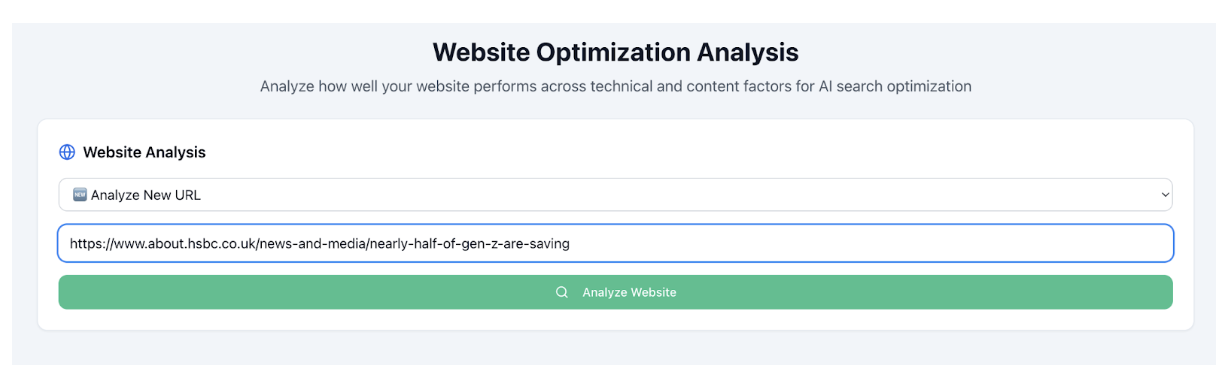
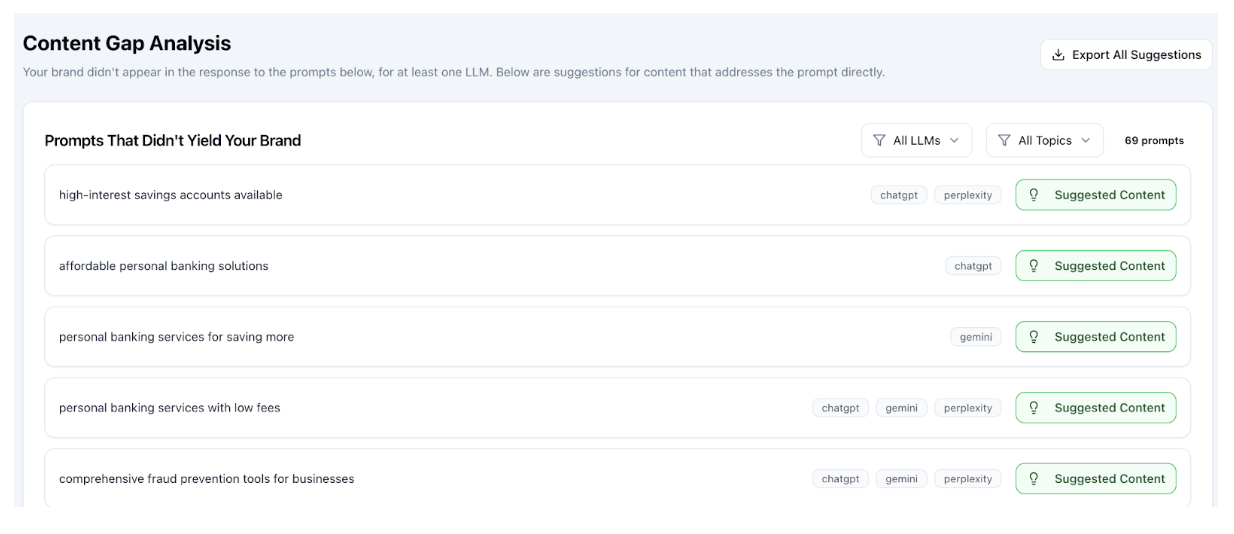
    Spotlight is the first platform built to help brands measure, understand, and grow their presence inside Large Language Models (LLMs) like ChatGPT, Google AI OverviewsClaude, Gemini, and Perplexity. By fusing real-time LLM outputs with Google Search Console data and competitive benchmarking, Spotlight reveals where your brand shows up in AI-generated answers and where it doesn’t. But it doesn’t stop at insights. Spotlight is the only platform that not only identifies content gaps but also tells you exactly what to do about them and then tracks whether it worked.

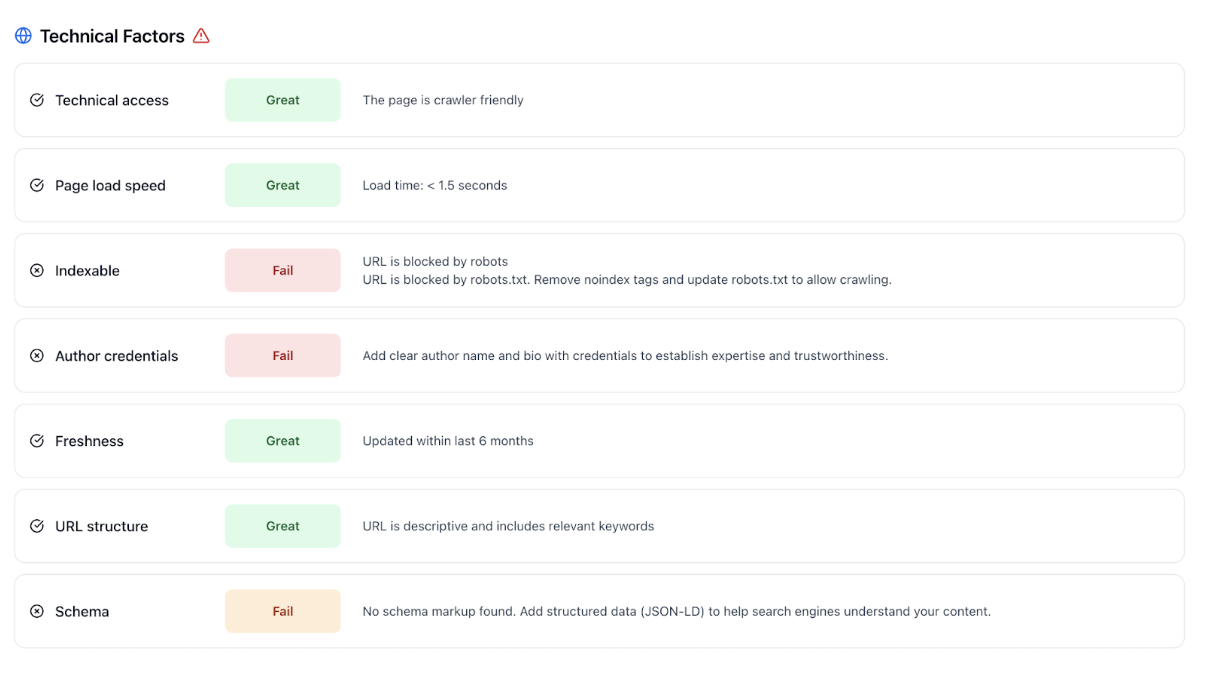
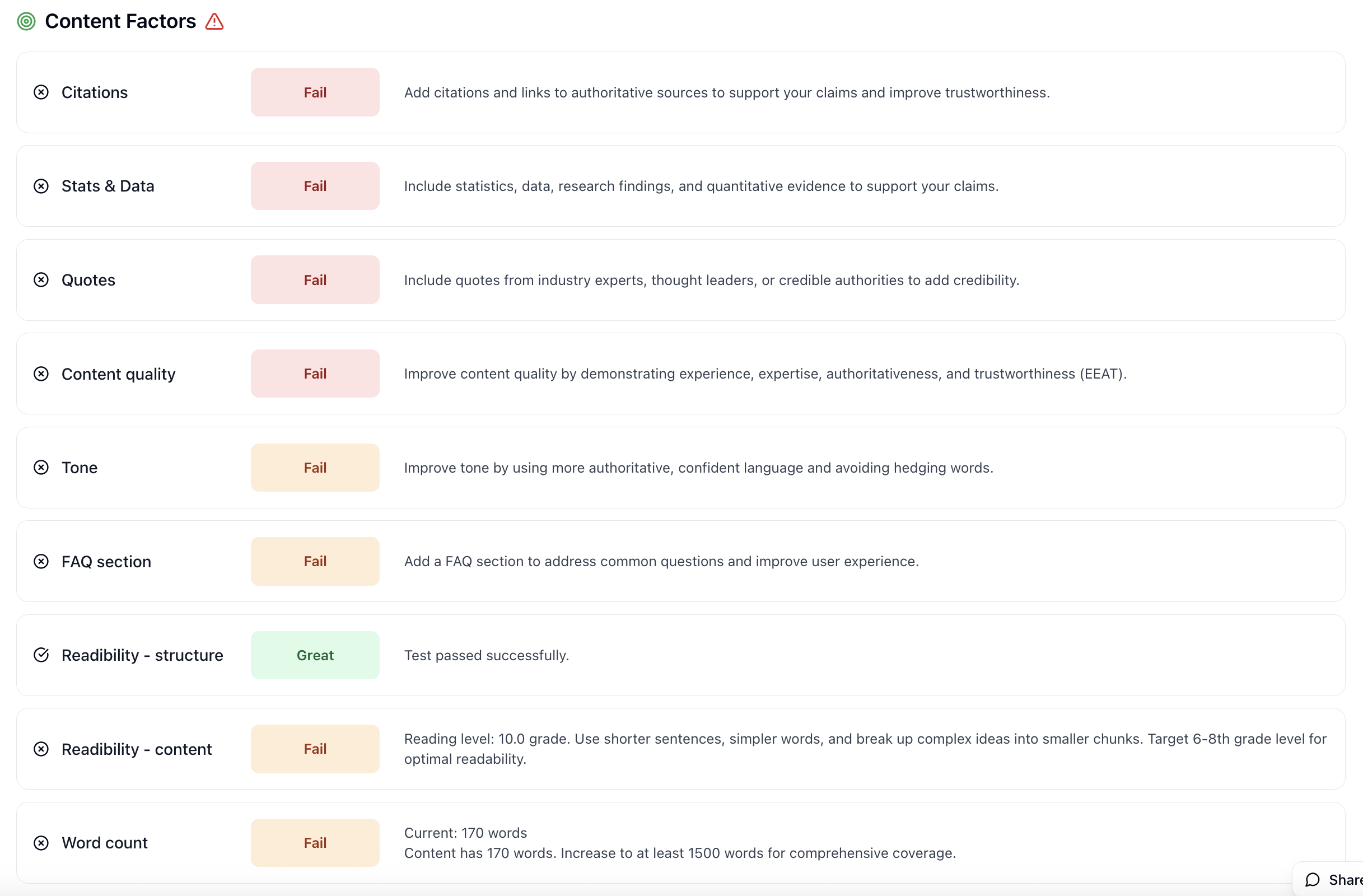
    By analyzing the actual sources LLMs use to form their answers, Spotlight uncovers the hidden structure of LLM-optimized content: preferred formats, ideal length, use of citations, authorship signals, semantic layout, and more. It surfaces the patterns across hundreds of thousands of high-performing pages to reverse-engineer what the models prioritize.

    These insights are then transformed into robust, ready-to-use content briefs; giving your team a blueprint for creating LLM-friendly content that is not only optimized, but strategically structured to rank. From there, Spotlight continuously monitors how and when your new content is picked up by LLMs, closing the loop between strategy, creation, and real-world impact.


  • How to replace your data analyst with Cursor and AI (in 20 minutes)

    How to replace your data analyst with Cursor and AI (in 20 minutes)


    Last week I spent 35 minutes interviewing a data analyst… and barely scratched the surface of how our platform and database work.
    Huge waste of time.

    In those same 35 minutes, I could’ve built a fully working web app end-to-end with AI—while having breakfast.

    So I thought: What if I just unleash AI on data analysis?
    Turns out… you can.

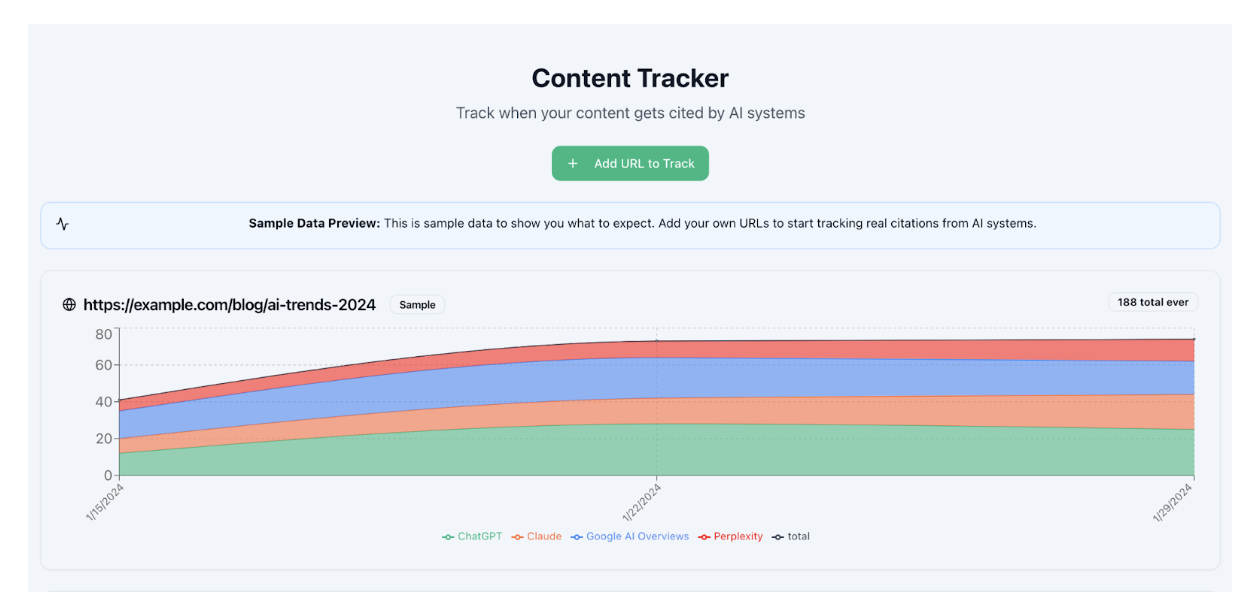
    My goal: Extract actionable insights from Spotlight’s massive database of AI prompts, responses, brand mentions, cited websites, and more—for better brand visibility.

    Here’s exactly how I did it:


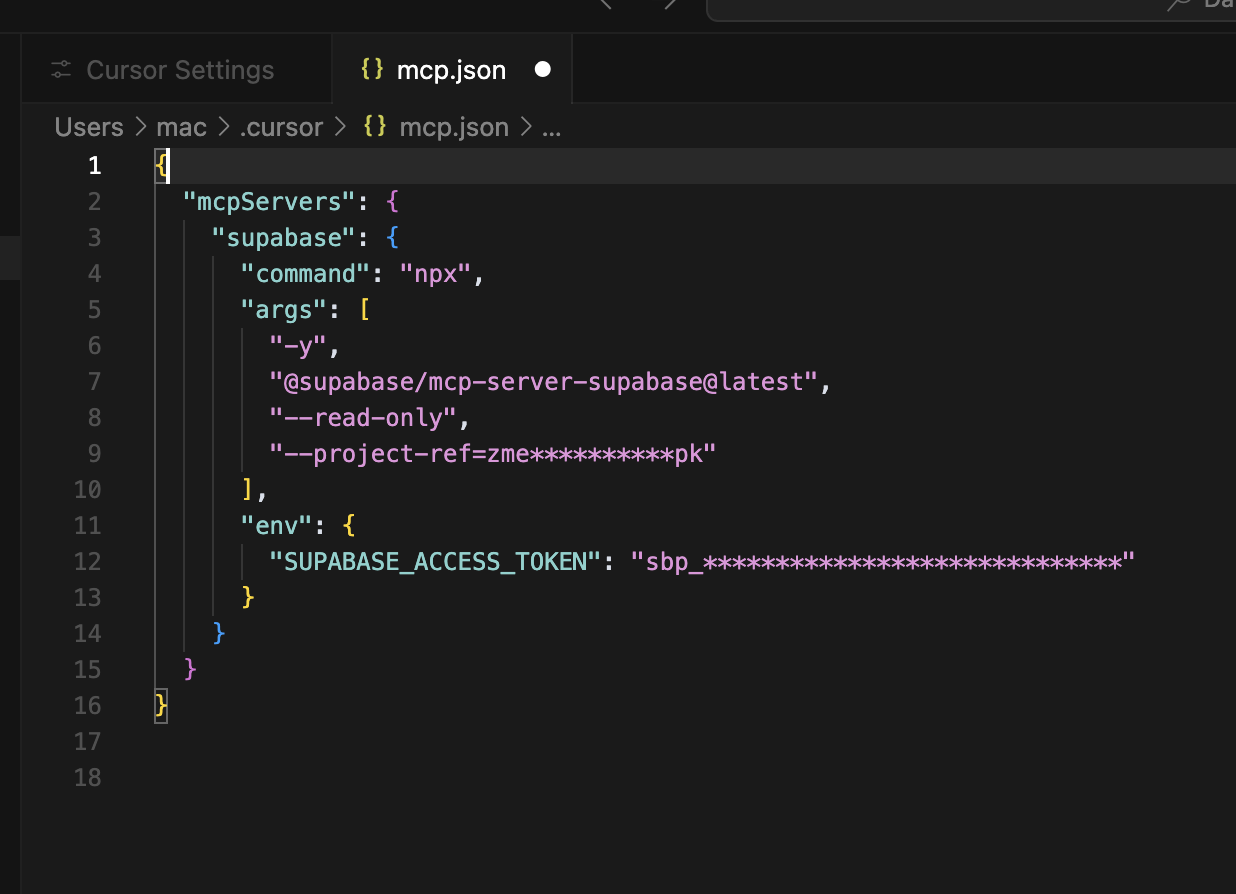
    1. Connect Cursor to Your Database via MCP

    • Download Cursor (any AI IDE like Windsurf should work too).
    • In Cursor, head to:
      Settings > Cursor Settings > Tools & Integrations > New MCP Server

    This opens a JSON editor where you’ll drop your database credentials.

    Where do you get MCP connection details?
    Depends on your database provider. Most modern DBs support MCP out of the box.
    If yours doesn’t, it’s ridiculously easy to spin one up locally. Ask Claude to build you a quick MCP server—it’ll even tell you how to run it.

    Once connected, you’ll see a green dot. Click the 'X tools enabled' to see what access the MCP has on your database.
    The one you must have is:
    execute_sql → lets Cursor run SQL queries directly.

    2. Ask Cursor to Map Your Database

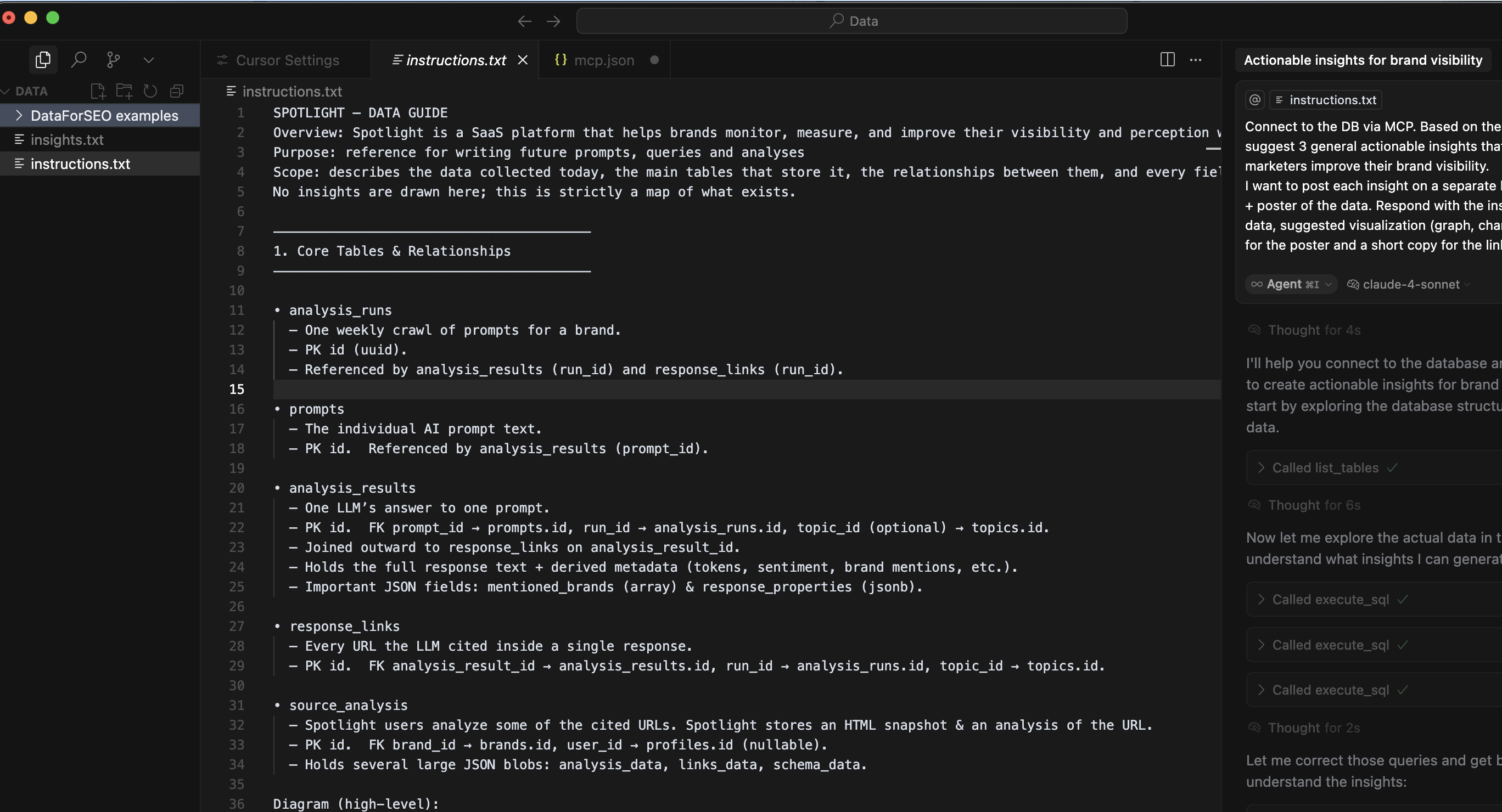
    Create a new text file (call it instructions.txt or whatever) and drop in this prompt.
    Use Agent Mode—preferably with Cursor 4 (but Gemini 2.5 or OpenAI o3 also work great).

    Connect to the DB using MCP. Study the table structure and relationships.  
    Write into the document a description of the tables along with data samples.  
    If a column is complex (JSON or arrays), fetch a few row samples and show examples of the values.  
    Write this description as a guide for future prompts to query the database for insights and actions. 
    Output the guide into @instructions.txt
    

    When it’s done, you’ll have a clean document describing your DB structure + sample data.


    3. Add Your Business Context

    Next, feed Cursor a description of your business and objectives (grab an existing doc, or have Gemini/Perplexity generate one).
    Paste it at the top of your instructions file using this prompt:

    Add to the top of the file a description of my business and objectives:  
    [paste business description + objectives]
    

    Boom. Now Cursor understands both your data and what you actually care about.

    4. Query the Database for Insights

    Time for the fun part.
    I used Claude 4 in Agent Mode, with the instructions file as context. Here’s the prompt (modify according to your needs):

    Connect to the DB via MCP.  
    Based on the instructions file, query and analyze data and extract 
    [10 generic actionable insights that could help marketers improve their brand visibility in AI chatbots].  
    
    For each insight, show me the underlying data + calculations used.  
    Write the results into a new file. 
    

    Where to Go From Here

    Now you’re basically unlimited:

    • Open new chats, just remember to attach your instructions.txt (or make it a global rule).

    • Always use Agent Mode (MCP won’t work otherwise).

    • Try different models:

      • Gemini 2.5 → giant context window.
      • OpenAI o3 → ridiculously sharp reasoning.
      • Claude → fast and reliable.

    Discover something cool?
    Hit me up → michael@get-spotlight.com

  • Built to Be First: The Cognitive Science Behind LLM Visibility

    Back in 2012, visibility was something you could buy.
A well-placed bid, a few clever keywords, and a handful of backlinks were enough to nudge your brand onto page one. Search was a game — noisy, yes, but knowable. You could outspend, out-optimize, or outwait the competition.

    That world is vanishing.

    In its place: a quieter, more opaque ecosystem where visibility is bestowed. Where your brand’s presence is no longer earned through page clicks, but summoned by the cold inference of a machine.Welcome to the age of the large language model.

    The Tyranny of Being First

    Ask ChatGPT a question about mortgages, or Claude about ESG investing, or Perplexity about crypto wallets and you’ll notice something. The same names surface. Again and again. Not because they’re the most ethical. Or the most innovative. But because they were early. Structured. Frequently cited. Built for machines, not just for humans.

    What’s at play here is not just technology. It’s psychology.

    Cognitive science calls it the primacy effect: our bias toward what we see first. What we see first, we remember. What we remember, we trust. In a world where LLMs are becoming the new front page of the internet, first position is not a convenience. It’s destiny.

    Add to that position bias; our tendency to believe top-ranked answers are more credible and you begin to understand: in LLMs, perception is reality.

    And for the brands that aren't in the first wave of answers? They might as well not exist.

    Your Brand, as Understood by a Machine

    LLMs don’t “search” the way humans do. They don’t care about page rank or ad spend. They absorb. They predict. They stitch together meaning from trillions of words. Which means they understand your brand not through your home page or your brand film but through your residue.

    Your brand is a statistical pattern. A mesh of citations, sentence structures, contextual cues. Not what you say, but how you’re spoken about. Not what you publish, but how the internet metabolises it.

    This changes the brief entirely.

    Too many marketers respond to LLM invisibility the wrong way. They panic, publish more, ramp up SEO production as if they’re shouting louder into a storm. But LLMs aren’t impressed by noise. They’re selective readers with very particular tastes: clarity, citation, semantic structure, regional grounding, and source reliability.

    Publishing more is irrelevant unless what you publish is aligned with how machines think.

    So pause. Audit. Not with SEO tools; but with an LLM lens. Where are you showing up? How are you being described? What types of content in your category are surfacing consistently and why?

    You need to forget what’s trending and look at what’s recurring.

    Get Your House in Order
    Before you aim to outrank your rivals, you need to clean up your own signal.

    Is your content geo-anchored?

    Is your language consistent across regions and channels?

    Are you cited by sources LLMs trust?

    Are your most important assets digestible by machines?

    It’s not about saturation. It’s about precision. The brands that show up are the ones who leave a trail built to be followed: structured, relevant, machine-readable.

    SEO was about optimising content for discoverability. LLM strategy is about engineering content for adoption.

    Think about the models themselves. They're retrained, updated, and fine-tuned continuously. A single PR piece picked up in a government report can shift your brand's prominence overnight. A misattribution or outdated FAQ can bury your relevance for months.

    If you're still treating content governance like a hygiene task, you're already behind. It's the plumbing. The wiring. The bones.

    Your teams must treat LLM visibility as a living, breathing channel. One that requires constant monitoring, real-time feedback loops, and proactive adaptation. It’s not a campaign. It’s a system.

    There is an unspoken danger here.

    LLMs aren’t echo chambers; they’re architects of what gets remembered. That means the brands that win visibility early get more exposure, more citations, more inferred credibility and, in turn, more inclusion in future model updates. It’s a feedback loop. One that doesn’t necessarily reward truth, quality, or innovation. It rewards presence.

    If your competitor is first, they get to define the category. Not just in language, but in logic.

    The most dangerous place for a brand to be is not misunderstood. It’s unmentioned.

    So What Next?

    Forget the homepage redesign. Forget the microsite. If you want to matter in the age of LLMs, you need to stop creating content for humans to browse and start creating content machines will choose.

    Because here’s the reality no one wants to say out loud: the content that shapes rankings in ChatGPT, Claude, Gemini, and Perplexity isn’t the loudest. It’s the most usable. The most structured. The most model-friendly. And that doesn’t happen by accident—it happens by design.

    The models are telling you what they like. You just have to listen. Look at the answers. Study the formats that keep surfacing. Track the patterns. Then build accordingly.

    And once you've done that? You don’t sit back. You watch.

    LLM visibility isn’t static, it moves. What appears in answers today might be gone by next week. A competitor publishes a better version. A new model rolls out. The model drifts. Suddenly, you’re out of the conversation.

    If you’re not tracking your content’s performance across models, you’ll lose ground before you even realise you were in the race. This is survival. You need a system. A tool. Something built to monitor the rise and fall of your visibility in real time. Because that’s the only way you stay ahead of the pack.

    This is the new frontline of digital relevance. No second pages. No fallback clicks. Just one shot to be part of the answer.

    If you’re not building for the model, you’re building for no one.

    Because in this new ecosystem, relevance isn’t granted by search engines or swayed by paid media. It’s determined by machines parsing trillions of signals—and deciding, in milliseconds, whether you matter.

    There’s no front page. No scroll. No second chance.

    You’re either chosen, or you’re not.

    Spotlight exists to make sure you are.

    It shows you what the models see. Tracks how your brand moves across answers. Flags the gaps. Surfaces the threats. And helps you create content the machines are more likely to use; again and again.

    In a world where LLMs are the new gatekeepers of visibility, Spotlight is your radar, your compass, and your competitive edge.

    Because if the models are shaping the future of your brand, you’d better be shaping what they learn.

    Sources
    www.get-spotlight.com

    Primacy Effect (https://wirkungswerk.de/en/primacy-effect-a-critical-consideration/)

    Position Bias (https://medium.com/manomano-tech/conquering-position-bias-d64880104fd4#)

  • The Biggest Shift in Brand Visibility Since the Internet — And No One’s Ready

    Late one evening, a friend told me how he’d asked ChatGPT about his child’s fever. The model responded with a shared citation: “According to Mayo Clinic…” It provided relief and it built trust. That moment, seemingly small, marks a profound departure in how we discover brands. We’ve moved past search; we are now existing in a world of conversation. Questions don’t go to Google; they go to generative models. The moment the model “remembers” a brand, that brand exists. And if it doesn’t recall you? You are invisible.

    It’s not merely anecdotal. A Stanford research team demonstrated that AI responses bearing clear citations earn significantly more trust—even when the answer is imperfect. Meanwhile, global surveys from KPMG and Gartner reveal a dissonance: while over 75% of professionals expect AI to reshape their work within two years, fewer than half say they trust its output. In an ecosystem where attention is concentrated in conversational windows, not search pages, that trust gap becomes a battlefield—and brands carry both the risk and the opportunity.

    To understand what’s unfolding, we can look back to when feature-phones morphed into smartphones. Brands that dominated the App Store climbed not through keywords, but by embedding themselves into the very platform interface. LLMs represent the same transformation. They aren’t indexing URLs—they’re weaving associations into their memory. And brands that fail to form part of that weave risk being bypassed altogether.

    This is where www.get-spotlight.com steps onto the stage. Without fanfare, it gives brands a pulse check on how frequently and in what tone they appear in model-generated answers. More than visibility, it tracks sentiment and data sources; a brand-level X-ray for AI recall. One B2B SaaS client discovered that after distributing structured content to neutral repositories and securing citations in high-authority sources, their brand recall in LLM responses jumped 42%. Competitors? Virtually unchanged.

    Deepfakes and automated misinformation grab headlines, but they matter only if users expect reliability. In generative conversations, reliability begins with citation. That’s why brands need a new form of storytelling: one that supplies the narrative, context, and authority models consume; and remember.

    Forget optimising for clicks. Forget chasing SERP rankings. Your strategic priority must shift toward quiet memorability: structured, sourced, model-readable context that lingers in the AI mind even between sessions.

    Because tomorrow, when someone asks, “Which CRM should I trust?”, the brand that’s not merely recalled; but memovoked, wins. And in the quiet between question and answer, brands either are or are not present. That’s today’s battleground.

    Sources

    Stanford HAI on AI citation trust
    https://hai.stanford.edu/news/generative-search-engines-beware-facade-trustworthiness

    Axios on citation-based trust in generative search
    https://www.axios.com/2023/05/03/chat-based-search-citations-accuracy-research

    KPMG Global AI Study (2025)
    https://kpmg.com/us/en/articles/2025/trust-attitudes-and-use-of-artificial-intelligence.html

    Gartner research on AI and customer trust
    https://www.cxtoday.com/conversational-ai/customers-reject-ai-for-customer-service-still-crave-a-human-touch

    Business Insider summary of KPMG AI trust report
    https://www.businessinsider.com/kpmg-trust-in-ai-study-2025-how-employees-use-ai-2025-4

    The Australian on AI distrust in Australia
    https://www.theaustralian.com.au/nation/australians-less-trusting-of-ai-than-most-countries/news-story/ca11793f341b7bd5d2682ef6e8959cde

  • ChatGPT Search Inspector: How We Peek Behind the AI Curtain

    Have you ever wondered how ChatGPT finds answers when you ask it a question? Does it just know everything, or does it actually search the web?

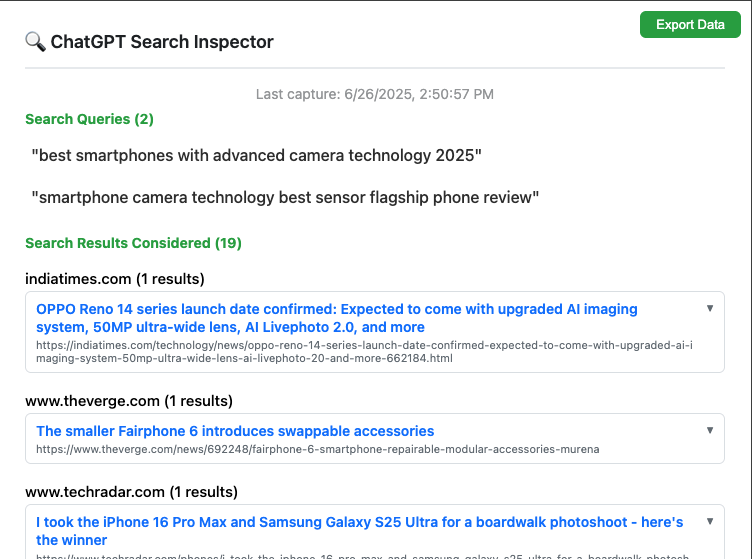
    At Spotlight, our research team is obsessed with figuring out how AI tools like ChatGPT talk about brands. To help us understand what’s going on under the hood, we built a simple (but powerful!) Chrome extension called ChatGPT Search Inspector.

    It’s a tool we use daily, and with that in mind, made it available to everyone.


    ChatGPT Search Inspector extension screenshot

    Why Does ChatGPT Search the Web?

    First, let’s get one thing clear: ChatGPT doesn’t always search the internet. In fact, about 50% of the time, it gives answers from what it already knows from its training dataset.

    But when thinks it needs fresh data, it searches the web (Bing and/or Google) in real time.

    Here’s when ChatGPT might search the web:

    • To find up-to-date information (like current events, prices, or sports scores)
    • To discover product listings or comparisons
    • To check what’s trending or popular online
    • To look up specific websites or recent articles
    • When it needs more details it doesn’t already know

    When it does this, ChatGPT sends a query to a search engine (usually Bing). Then, it looks through the top results, picks the ones that seem helpful, and uses them to build a response.


    What Does the ChatGPT Search Inspector Do?

    ChatGPT Search inspector allows you to see exactly what it is searching for and what links it’s reading. Think of it like holding a magnifying glass up to ChatGPT’s brain while it works. 

    Here’s what the tool shows you:

    • Search queries ChatGPT sends to Bing
    • Web pages ChatGPT actually visits
    • Summaries of those pages (what info ChatGPT pulls out)
    • Timing of when each page was opened

    All this data appears in real time, while ChatGPT is browsing—right in your browser window.


    Why This Matters for Brands

    If you work in marketing, SEO, content, or brand strategy, this tool can give you superpowers. It shows which websites ChatGPT trusts, and what kind of content it uses in answers.

    Why is it a huge deal? 

    Because when someone asks ChatGPT about your brand—or your competitor’s—it bases it answer on what it knows and what it finds 

    What it finds depends on: 

    • The search query it uses
    • The websites that show up in results
    • The content on those pages

    If your brand shows up often in those results? You’re in a good spot.
    If not? You might be invisible to AI.


    How Can Brands use ChatGPT Search Inspector?

    Using ChatGPT Search Inspector allows you to:

    • See what ChatGPT sees when it searches your space
    • Understand why your competitors show up more than you
    • Improve your content to match what ChatGPT prefers
    • Increase your chances of being mentioned or recommended

    FAQ

    Q: Who is this extension for?
    A: Anyone who wants to understand how ChatGPT uses the web—especially marketers, SEO pros, researchers, and content creators.

    Q: Do I need to know how to code?
    A: Nope! Just install the extension and open ChatGPT in your browser. It works automatically.

    Q: Does this work with all ChatGPT chats?
    A: After installed, it will automatically work when ChatGPT browses the web.

    Q: What data does it collect?
    A: The extension shows you what ChatGPT searches and reads—not your private messages or data.

    Q: Is ChatGPT Search Inspector free?
    A: Yes! We made it for our internal research at Spotlight, but we’re sharing it publicly to help the community.

    Q: How do I install it?
    A: Go to the Chrome Web Store page and click “Add to Chrome.”


    What can Spotlight do for you? 

    We built this tool because we run Spotlight, a platform that helps brands understand how they show up in AI conversations.

    With Spotlight, you can:

    • Track your brand’s visibility across ChatGPT, Gemini, Claude, and Perplexity
    • Analyze what AI models say about you (and your competitors)
    • Discover which websites AI models rely on
    • Get content suggestions to improve your presence
    • Optimize existing pages with smart tools

    By showing you how ChatGPT thinks, ChatGPT Search Inspector allows you to go even deeper.  


    Ready to Try It?

    The extension is available now. Use it to:

    • Watch ChatGPT’s live search activity
    • Discover what content influences answers
    • Learn how to get your brand seen (and trusted)

    Install ChatGPT Search Inspector on Chrome now


    Final Thoughts

    AI assistants like ChatGPT are becoming the new front door to the internet. What they say—and what they don’t—can make a big difference for your brand.

    ChatGPT Search Inspector is our way of opening that door a little wider. It’s free, easy to use, and gives you real insight into how modern AI thinks.

    Whether you’re a curious marketer, a tech-savvy founder, or just someone who wants to peek inside the AI brain, this tool is for you. 

    Let us know what you find. We’re learning too.

  • From SEO to AEO: Winning in the New Age of Answer Engines

    For two decades, the goal of digital marketing was to win the click. Brands invested billions to climb Google’s rankings, guided by the principles of Search Engine Optimization (SEO). But that era is ending. A fundamental behavioral shift is underway, as users increasingly bypass traditional search for the direct, synthesized responses of Large Language Models (LLMs). For business leaders, this isn't a minor technical adjustment; it's a strategic inflection point. The new mandate is Answer Engine Optimization (AEO), and mastering it will define the next generation of market leaders.

    The Inevitable Shift from Search to Synthesis

    While Google’s dominance remains formidable, the tectonic plates of information discovery are moving. ChatGPT now handles billions of queries a week, and the growth is compounding. More critically, the nature of search is changing. Research from Bain & Company reveals a startling trend: 40% of consumer queries are now resolved without a single click, thanks to generative AI integrated into search results.

    This pattern echoes previous digital disruptions. E-commerce languished until innovations like one-click checkout removed friction. Mobile internet usage exploded only after app stores and affordable data plans created a seamless user experience. LLMs represent a similar tipping point for information. They deliver instant, polished answers, collapsing the discovery funnel and threatening to make brand websites a destination of last resort. For brands built on attracting traffic, this is an existential threat.

    The New Playbook: From Keywords to Credibility

    The tactics that defined SEO are insufficient for this new reality. The old model was a game of visibility; the new one is a game of authority.

    Traditional SEO is engineered to rank a page. It relies on keywords, backlinks, site speed, and technical structure to signal relevance to a search engine crawler. The primary goal is to entice a user to click through to a brand's owned digital property.

    Answer Engine Optimization (AEO) is engineered to become the source. It emphasizes structured, conversational knowledge that an LLM can easily parse, verify, and cite. The goal is not merely a click, but to be the definitive answer woven directly into the user’s response. Success is measured in mentions, citations, and influencing the AI's output—not just traffic.

    This transition from a page-centric to a knowledge-centric model requires a profound strategic shift. An LLM doesn't "visit" your homepage; it ingests your entire digital footprint—from your site's FAQs and product data to your mentions in trade publications and reviews on third-party sites—to form a holistic judgment of your authority.

    Evidence from the Front Lines

    This is not a future-state prediction; the correlation between authority and visibility is already quantifiable. One recent analysis found a 67–77% correlation between ranking on the first page of Google and being cited as a source by leading LLMs like ChatGPT and Perplexity. The authority signals Google has long valued are now the foundational training data for its successors.

    Furthermore, generative AI is rapidly becoming a commercial channel. Bain reports that 42% of Gen AI users now rely on it for shopping recommendations. As noted in the Financial Times, this has spurred a new category of marketing technology, with firms like Profound and Brandtech emerging to help brands track and improve their visibility within AI-generated results. They recognize that if you aren't the source of the answer, you are invisible.

    Four Strategies to Build Authority in the AEO Era

    Thriving in this ecosystem requires rewiring content strategy around four strategic pillars:

    Structure Content for Inquiry, Not Just Keywords.

    LLMs prioritize content that directly and authoritatively answers a question. Brands must move beyond keyword-stuffing and develop robust clusters of content—comprehensive FAQs, "how-to" guides, and glossaries—that are clearly organized with conversational headers and schema markup. The objective is to create modular, easily digestible knowledge blocks that an AI can confidently extract and present as fact.

    Build a Web of Trust Beyond Your Website.

    An LLM's confidence in your answer is determined by cross-domain validation. A brand's own website is just one data point. The new currency is distributed authority. This requires a renewed focus on public relations, industry partnerships, and earning citations in reputable news outlets, academic papers, and high-authority review sites. Your credibility is only as strong as your network of external validators.

    Align Content Architecture to the Full Spectrum of Consumer Questions.
    Instead of creating disconnected blog posts, leaders must architect themed content hubs that anticipate and address a wide range of related user intents. By building a comprehensive knowledge base around a core topic—from informational queries to purchase considerations—a brand signals to an LLM that it is a definitive authority in that domain.

    Measure What Matters: Mentions and Citation Velocity.
    The old dashboards of traffic and rankings are becoming obsolete. Leaders must adopt new tools to measure AEO performance, tracking how often their brand is cited in LLM outputs for key queries. This "share of answer" is the new "share of voice." Companies like Revere and Further are pioneering this space, offering analytics to help brands understand their visibility and influence within conversational AI.

    The Leadership Imperative

    The move from SEO to AEO is not a marketing task to be delegated; it is a strategic imperative for the C-suite. It challenges how businesses structure their content, measure their market presence, and define their digital authority.

    Leaders who continue to view their digital strategy solely through the lens of driving traffic to a website risk being disintermediated into oblivion. The brands that will thrive are those that pivot now, rebuilding their content philosophy not just for human readers, but for the machines that increasingly serve as our primary gateway to information. The future of brand discovery will not be about being found; it will be about being the answer.

  • LLMs vs Search: The Coming Battle for Consumer Attention

    LLMs vs Search: The Coming Battle for Consumer Attention

    There is a simple truth that drives human behaviour across centuries: when given the choice, people will always migrate toward actions that are quicker, easier, simpler, faster, and more effective.

    This behavioural law is agnostic of technology or culture. It is the reason we moved from hunting to agriculture, from horse-drawn carts to automobiles, from physical maps to GPS. Convenience compounds. Once a more frictionless path becomes visible, the migration is inevitable.

    Today, we are witnessing the early edge of such a shift in the digital space: the movement from traditional search engines to Large Language Models (LLMs) as the primary interface for information and decision-making.

    A Slow Uptake That Will Snowball 

    At present, the pace looks modest. Global consumer adoption of tools like ChatGPT, Claude, Gemini, and Perplexity still represents a fraction of total online queries compared to Google Search. It is easy to look at today’s data and conclude that search will remain dominant for years to come.

    But this thinking ignores a well-documented pattern from technology adoption history: these shifts start slow, then snowball—fast.

    We have seen it before. In the early 2000s, few believed that online retail would threaten physical stores. Early e-commerce was clunky and limited. But once Amazon’s one-click purchase model and same-day shipping reduced friction to near-zero, consumer behaviour tipped dramatically. The same happened with mobile-first content: until smartphones were ubiquitous and data plans cheap, desktop ruled. Then behaviour changed almost overnight.

    Why? Because once a new path offers a meaningfully easier and faster experience, the user migration is not linear, it is exponential. Each improvement in the underlying technology accelerates the curve.

    This is precisely where LLMs are today. The early friction—limited accuracy, slow response times, unfamiliar UX—is dissolving quickly. The ability to ask a question and receive a clear, synthesised answer—without sifting through links, clicking, or reading—maps perfectly to the human drive for simplicity and speed.

    The shift is deeper than convenience. LLMs do not just present information, they compress the decision journey. Instead of searching, comparing, and evaluating, users will increasingly rely on these models to suggest, rank, and even execute choices on their behalf. In marketing terms, the funnel is collapsing into a single conversational layer.

    Critically, this shift will not be confined to a niche of early adopters. Just as mobile content consumption leapt from tech enthusiasts to the mass market once the experience was seamless, the same dynamic will unfold here. Already, major players—Google, Apple, Microsoft—are embedding LLM interfaces into core products used by billions. As this happens, consumer interaction patterns will rewire rapidly.

    Refining Marketing Strategies to Include LLM Visibility 

    For brands, the implication is profound. The battleground is no longer just about ranking on a search results page. It is about being surfaced, recommended, and trusted in the model’s output at the exact moment of consumer intent. And this requires a different content strategy, data approach, and brand presence—optimized for the AI’s reasoning layer, not just the search index.

    This also implies SEO strategies now must include LLM SEO for a brand to be successful across all channels. If a brand isn’t mentioned in the LLMs it runs the risk of becoming invisible once the uptake in AI engines really takes off. Brands will also need to track their results, and that is where LLM SEO trackers such as Spotlight come in. 

    However, some will argue that because LLM traffic is still relatively small, there is time to react. History suggests otherwise. When the behavioral tipping point comes—and it will—it will move faster than expected.

    We are not witnessing a marginal shift. We are witnessing the beginning of a new primary interface for digital behaviour. The brands that understand this, and invest now to adapt their content and strategies for the LLM paradigm, will find themselves far ahead of the curve when the snowball begins to roll.

  • How Chatbots Are Quietly Becoming the World’s Biggest Salespeople

    The Big Idea

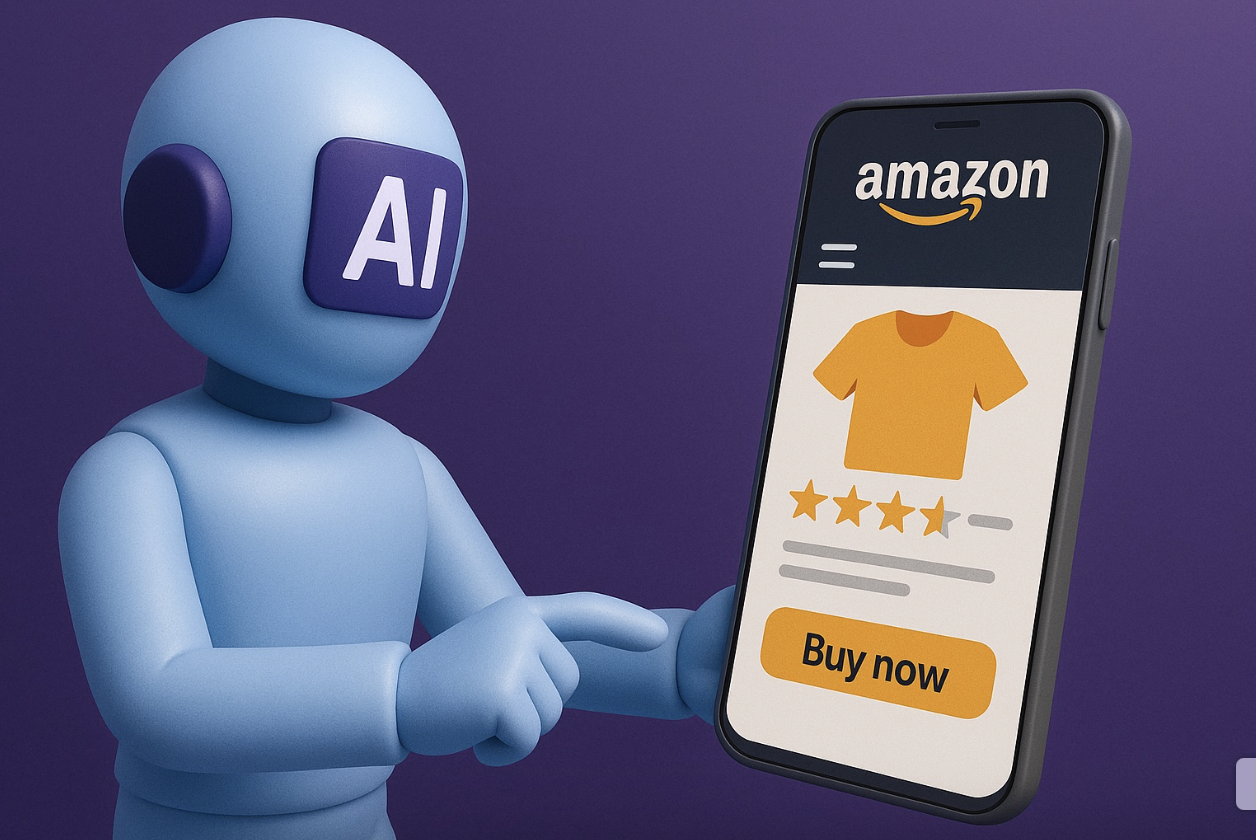
    A tectonic shift in digital commerce is underway. Until recently, AI assistants were tools for search and summarisation. Now, they are evolving into active agents capable of executing complex commercial transactions. Leading payment brands like PayPal , Klarna , and Shopify are embedding their services directly into platforms like ChatGPT, Perplexity, and Claude, collapsing the traditional customer journey from discovery to purchase into a single, seamless conversation.

    This move toward agentic commerce, where AI acts on a user's behalf to spend money, represents the most significant disruption to the digital storefront since the rise of mobile. For leaders, the question is no longer if they should integrate into these ecosystems, but how to do so in a way that builds brand equity and captures a new, high-intent market. Companies that fail to adapt risk becoming invisible to the next generation of consumers.

    The line between seeking information and making a purchase has officially blurred to the point of vanishing. Consider this near-future scenario: A marketing manager asks an AI assistant, “Find and book a flight to the Singapore conference next month, business class, and a hotel near the convention center with a gym. My budget is $6,000.” In the past, the AI would have returned a list of links, sending the user on a multi-tab journey through airline and hotel websites. Today, it can do much more. It can present three optimised packages, and upon the user’s command; “Book option two”; it can execute the purchase from Hilton and Singapore Airlines using a pre-linked PayPal or credit card account, all within the same conversational window.

    These integrations represent a fundamental rewiring of digital commerce. They move the point of sale from a destination website or app to the very point of consumer intent. For business leaders, this shift requires a new playbook. The strategies that defined success in the eras of web and mobile commerce; search engine optimisation, social media marketing, and app-store visibility; are insufficient for a world where the primary interface for commerce is a conversation.

    Why This Changes Everything
    The move to agentic commerce presents both a profound opportunity and an existential threat. Leaders who grasp the strategic implications can build deep competitive moats, while those who don’t will lose control over their customer relationships. Four key shifts demand immediate attention:

    1. The Funnel Collapses into a Conversation. The traditional marketing and sales funnel; awareness, consideration, conversion; is obsolete in an agentic model. An AI assistant can take a user from a vague need (“I need a gift for a new homeowner”) to a completed purchase in seconds. This compression means brands have only one chance to make an impression. The "shelf space" is no longer a search results page or a social feed; it's the AI's recommendation. The critical challenge shifts from driving traffic to ensuring your products and services are the ones the AI knows, trusts, and selects.

    2. A New, High-Intent Distribution Channel Emerges. AI platforms are a new category of distribution. Unlike traditional advertising, where brands push messages to passive audiences, agentic commerce is a pull model. Consumers are explicitly stating their needs and granting the AI permission to solve them. This is the highest-intent channel imaginable. Brands that are integrated are positioned to capture sales at the peak moment of consumer desire, while those outside the ecosystem are simply not part of the consideration set.

    3. Trust Becomes a Transferable Asset. A significant barrier to conversion in traditional e-commerce is checkout friction and payment security concerns. By embedding trusted brands like PayPal, Visa, and Mastercard directly into the chat, AI platforms are borrowing decades of established consumer trust. This dramatically lowers the perceived risk for users, increasing conversion rates and reducing cart abandonment. For brands, this means the technical and psychological burden of building a trustworthy checkout experience is handled by the platform, freeing them to focus on product and service quality.

    4. Data and Personalisation Reach a New Frontier. The data generated from conversational transactions is richer than any clickstream data that came before it. Brands can gain unprecedented insight into the context of a purchase: the questions the user asked, the alternatives they considered, and the specific priorities they voiced (e.g., sustainability, speed of delivery, budget). This allows for a new level of personalization in product development, loyalty programs, and follow-on marketing that is predictive rather than just reactive (This is exactly what Get Spotlight is doing)

    The Strategic Imperative: A Playbook for the Agentic Era
    Navigating this new landscape demands a strategic realignment. Leaders should focus on three priorities:

    First, rethink the customer journey around conversational discovery. Your digital presence must be optimised not just for human crawlers but for AI agents. This means structuring product data, descriptions, and inventory levels so they are easily digestible and verifiable by AI models. It involves creating rich, descriptive content that answers the kinds of complex, multi-layered questions users will ask. Ask your team: If an AI were our primary sales associate, would it have the information it needs to recommend our product confidently?

    Second, build for interoperability and forge the right partnerships. In the agentic era, your business will exist as a node in a larger network of services. Success depends on how easily your systems can connect with others. This means prioritising API-first development and actively seeking integrations not only with AI platforms but also with the payment, logistics, and customer service providers that are part of their ecosystems. Your competitive advantage will be defined by the strength and seamlessness of your connections.

    Finally, realign marketing and sales to influence the AI. The new gatekeepers are the algorithms that power these AI assistants. Your marketing efforts must now be geared toward "recommender-engine optimisation." This could involve creating highly detailed product guides, generating positive and verifiable customer reviews, and ensuring your brand is prominently and positively featured in the data sets on which these models are trained. The goal is to become the AI’s trusted and default choice in your category.

    The era of passive, destination-based e-commerce will decline. The new frontier is conversational, agentic, and happening in the interfaces where consumers are already spending their time. By embedding payments, AI platforms have removed the final point of friction, transforming chat from a tool for inquiry into an engine for commerce. For leaders, the message is clear: the storefront is no longer a place you build, but a conversation you join. Those who learn to speak the language will thrive. Those who don’t will be met with silence.

  • The Wild West Is Back: Why 2025 Feels Like 2003 All Over Again

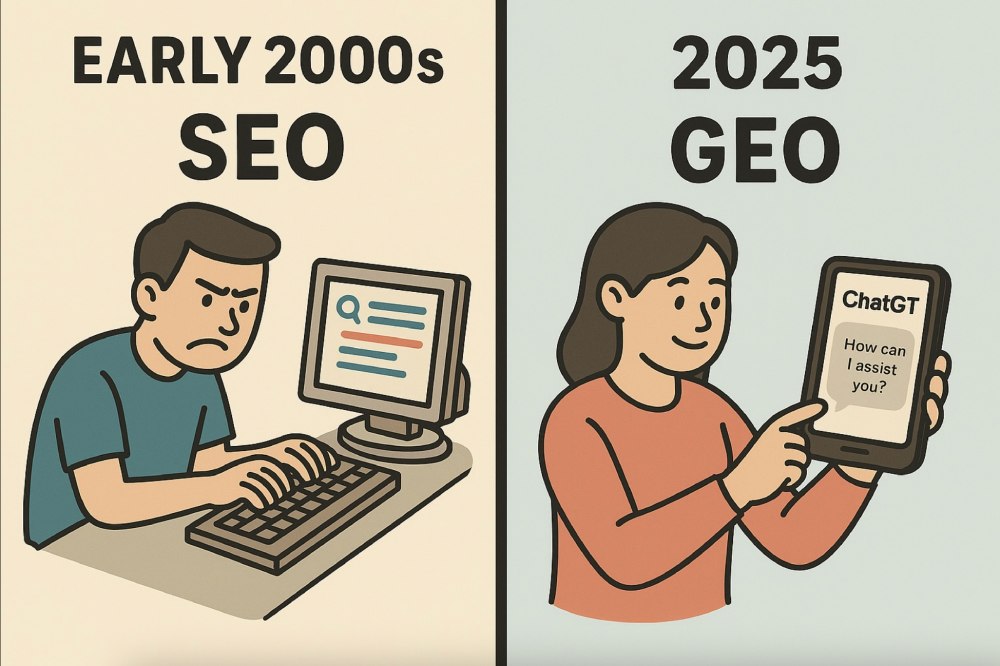
    SEO vs GEO

    Remember 2003? George W. Bush was president, everyone had flip phones, and Google was this scrappy search engine that most people still called "that Stanford thing." But if you were running a website back then, you probably remember something else: the absolute chaos of early SEO.


    The 2003 SEO Gold Rush: When Nobody Knew the Rules

    Picture this: You're a small business owner in 2003. Your competitor just hired some "SEO expert" who promised them page one rankings for $500 a month. Suddenly, when people search for "best pizza Chicago," your competitor shows up first and you're nowhere to be found.

    The Wild West Rules of Early SEO

    Back then, SEO was pure Wild West. Nobody had a playbook because there was no playbook to have:

    • Keywords were everything – Stuff "best pizza Chicago" into your page 47 times and watch the magic happen
    • Backlinks were currency – Get 1,000 random websites to link to you (quality didn't matter)
    • Algorithm updates meant chaos – Winners became losers overnight
    • Small fish could eat big fish – A smart college kid could outrank Fortune 500 companies

    The early adopters? They absolutely crushed it. Companies that figured out SEO in 2003-2005 built empires while their competitors were still buying Yellow Pages ads.


    Welcome to 2025: The GEO Gold Rush

    Fast forward to today. ChatGPT has 100+ million weekly users. Perplexity is handling millions of searches daily. Gemini is integrated into every Google service you use.

    And for the first time since 2003, we're in another "figure it out as you go" moment.

    The Uncanny Parallels Between SEO 2003 and GEO 2025

    Except this time, it's not about ranking #1 on Google. It's about being the answer that AI gives to millions of users when they ask questions about your industry.

    Content Signals Are the New Keywords

    Instead of stuffing "best pizza Chicago" 47 times, you're optimizing for how AI models interpret, understand, and cite your content.

    Authority Is the New Backlinks

    AI models don't count links—they evaluate expertise, accuracy, and trustworthiness. But just like backlinks in 2003, most companies have no clue how to build this new kind of digital authority.

    Nobody Knows What They're Doing

    There's no "GEO for Dummies" book yet. Most marketing teams are still debating whether they should care about AI search.

    Small Businesses Can Compete Again

    A startup with great content and smart positioning can show up in AI responses alongside IBM and McKinsey.


    Why This Moment Actually Matters More Than 2003

    Here's where 2025 gets really interesting: The stakes are higher now.

    The Compounding Effect of AI Training

    In 2003, if you missed the SEO boat, you could catch up in a few years. But AI search is different. These models are training on content right now. The patterns they learn today will influence their recommendations for years to come.

    Think about it: When someone asks ChatGPT "What's the best CRM for small businesses?" or "Who are the leading cybersecurity companies?", what answer do they get?

    If your company isn't part of that conversation now, when will you be?


    The Patterns That Never Change

    Here's what's wild: The fundamental dynamics haven't changed since 2003.

    First Movers Win Disproportionately

    The companies that figured out SEO early didn't just get traffic—they defined entire categories. When you searched for "project management software" in 2005, certain companies owned that conversation for years.

    Complexity Creates Opportunity

    Most companies are paralyzed by AI search because it seems overwhelming. But complexity is exactly where nimble companies beat bureaucratic ones.

    The Right Tools Create Unfair Advantages

    Just like early SEO spawned companies like Moz and SEMrush, GEO is creating new intelligence platforms. The companies using these tools have massive visibility advantages.

    Good Enough Beats Perfect

    In 2003, a "good enough" website that was properly optimized demolished a beautiful website that wasn't. Today, consistently good content that's optimized for AI discovery beats perfectly crafted content that AI models never encounter.


    What Smart Companies Are Doing Right Now

    The playbook is surprisingly similar to 2003, just updated for the AI era:

    1. Audit Your AI Visibility First

    Most companies have zero idea how often they appear in AI responses or in what context. It's like running a website in 2003 without checking your Google rankings—marketing malpractice.

    2. Hunt for Content Gaps Relentlessly

    What questions is your audience asking that AI models aren't getting authoritative answers for? That's your opportunity. That's your "underpriced keyword" moment.

    3. Build Authority Systematically

    Create comprehensive, well-researched content that AI models can confidently cite. Think Wikipedia-level reliability meets industry expertise, not generic blog posts.

    4. Monitor Competitors Obsessively

    See exactly where competitors are showing up in AI responses and where they're not. Then systematically fill those gaps before they do.

    5. Experiment and Measure Constantly

    Try different content formats, topics, and approaches. Track what works. Double down ruthlessly on what succeeds.


    The Next 18 Months Will Define the Next 10 Years

    Here's my prediction: By the end of 2026, we'll look back at 2025 the same way we look back at 2003-2004 for SEO.

    Clear Winners vs. Clear Losers

    • Winners: Companies that moved fast and built sustainable advantages
    • Losers: Companies that waited and are now asking "How did we miss this?"

    The Key Difference from 2003

    We actually have the data and tools to see what's happening in real-time. Platforms like Spotlight can show you exactly how AI models perceive your brand, where you're appearing in responses, and where your competitors are beating you.


    The Choice Is Yours: Early or Late?

    The question isn't whether GEO matters—we're past that debate. The question is whether you'll be early or late to the party.

    And if you remember how the 2003 SEO story ended, you know why timing matters.

    The companies that moved fast built empires. The companies that waited became footnotes.

    Which story will you write?


    Ready to see how AI models currently perceive your brand? Get a free visibility report and discover where you stand in the new search landscape—before your competitors figure it out.

  • The Agent Economy Is Here: Why AI Brand Perception Will Determine Your Market Position

    Buy directly on AI Chatbots

    The purchasing landscape is undergoing its most fundamental shift since the rise of e-commerce. Within the next five years, autonomous AI agents will handle a significant portion of consumer and B2B buying decisions—from routine purchases to complex vendor selections. When that happens, traditional marketing playbooks become obsolete overnight.

    The data is already pointing toward this reality. Recent studies show that 73% of consumers already rely on AI-powered recommendations for product research, while enterprise procurement teams report using AI assistants for 41% of their vendor evaluation processes. These numbers aren't plateauing—they're accelerating.

    For brands, this shift presents a critical question: When AI agents become the gatekeepers of purchasing decisions, will your brand be recommended, ignored, or actively avoided?

    The Mechanics of AI-Driven Commerce

    To understand why AI brand perception matters, we need to examine how AI agents actually make purchasing recommendations.

    Unlike traditional search engines that surface links for human evaluation, AI agents process vast amounts of information and deliver definitive answers. When a consumer asks their AI assistant to "find the best project management software for a 50-person team," the agent doesn't provide a list of options—it recommends specific solutions based on its training data, real-time research capabilities, and learned preferences.

    The mechanism is straightforward but profound: AI agents synthesize information from millions of data points—product reviews, technical specifications, pricing data, company reputation signals, and content quality indicators—to form brand perceptions that directly influence recommendations.

    This creates a new reality where brand visibility isn't about ranking #1 on Google—it's about ensuring AI models have access to accurate, comprehensive, and favorable information about your brand across all the data sources they reference.

    Why Traditional Marketing Strategies Fall Short

    Most brands still operate under the assumption that direct customer touchpoints drive purchasing decisions. They invest heavily in paid advertising, SEO optimization, and direct sales outreach—strategies designed for human decision-makers who actively research and compare options.

    But AI agents don't click ads. They don't scroll through search results. They don't attend your webinars or download your whitepapers. Instead, they form impressions of your brand based on the aggregate information available across the internet, industry databases, and their training datasets.

    Consider this scenario: A procurement AI agent tasked with finding cybersecurity solutions processes information about your company from dozens of sources simultaneously—customer reviews on G2, technical documentation, pricing transparency, thought leadership content, social proof signals, and competitive positioning data. The agent's recommendation depends entirely on how these data points collectively represent your brand's value proposition.

    Traditional marketing metrics become secondary. High ad spend doesn't guarantee AI recommendations. Strong SEO rankings matter less than content quality and information accuracy. Even sales team relationships lose influence when AI agents handle initial vendor screening.

    The Competitive Advantage of Early AI Positioning

    The brands that will dominate the agent economy are those positioning themselves strategically in AI-accessible information ecosystems today—before their competitors recognize the opportunity.

    This advantage compounds over time. Early positioning in AI training data creates lasting impressions that become increasingly difficult for competitors to overcome. When AI models learn that your brand consistently appears in high-quality contexts alongside positive outcome indicators, that association influences future recommendations across countless purchasing scenarios.

    Smart brands are already taking action:

    • SaaS companies are optimizing their technical documentation and API references to ensure AI agents understand their capabilities accurately
    • B2B service providers are creating comprehensive case study databases that demonstrate measurable client outcomes
    • E-commerce brands are investing in structured product data and authentic review cultivation across multiple platforms
    • Professional services firms are publishing thought leadership that establishes expertise in AI-accessible formats

    The window for first-mover advantage is closing rapidly. As more brands recognize the importance of AI perception, the competition for favorable positioning intensifies. Early movers establish credibility and context that become self-reinforcing over time.

    Strategic Actions for Agent Economy Preparation

    1. Audit Your AI Visibility Profile

    Start by understanding how AI engines currently perceive your brand. Test your positioning across major AI platforms by asking specific questions about your industry, use cases, and competitive landscape. Document where your brand appears in responses and how it's characterized.

    Key evaluation areas:

    • Brand mentions in industry-specific queries
    • Competitive positioning accuracy
    • Feature and capability representations
    • Pricing and value proposition clarity
    • Customer outcome associations

    2. Optimize Information Architecture

    AI agents excel at processing structured, comprehensive information. Review your digital presence to ensure critical brand information is organized, accessible, and consistently presented across platforms.

    Priority optimization areas:

    • Technical specifications and feature documentation
    • Customer success stories with quantifiable outcomes
    • Pricing transparency and value justification
    • Integration capabilities and technical requirements
    • Competitive differentiation and positioning statements

    3. Establish Authority in AI-Accessible Formats

    Traditional content marketing focused on driving website traffic and generating leads. AI-era content strategy prioritizes information quality, accuracy, and discoverability by AI systems.

    Effective content approaches:

    • Detailed case studies with specific metrics and outcomes
    • Technical documentation that demonstrates product capabilities
    • Industry analysis that establishes thought leadership
    • Structured FAQ content addressing common buyer questions
    • Comparison frameworks that highlight competitive advantages

    4. Monitor and Influence AI Recommendations

    Active monitoring of AI-generated content about your brand becomes essential for maintaining competitive positioning. Establish regular assessment processes to track how your brand appears in AI responses and identify opportunities for improvement.

    Monitoring priorities:

    • Brand mention frequency and context
    • Competitive positioning accuracy
    • Feature and capability descriptions
    • Customer outcome associations
    • Pricing and value proposition representation

    5. Build Authentic Digital Authority

    AI systems prioritize credible, authoritative sources when forming brand impressions. Focus on building genuine expertise and reputation signals that AI agents recognize as trustworthy.

    Authority building tactics:

    • Contribute to industry publications and thought leadership platforms
    • Participate in professional communities and expert networks
    • Publish original research and data-driven insights
    • Establish partnerships with recognized industry leaders
    • Maintain consistent, high-quality content publication schedules

    The Strategic Investment Imperative

    This isn't optional preparation—it's competitive survival. The brands that invest in AI perception today will enjoy sustained advantages as AI agents become primary purchasing influencers. Those that delay will find themselves excluded from consideration before human decision-makers ever evaluate their options.

    The investment required is significant but manageable for most organizations: dedicated resources for content optimization, monitoring systems for AI visibility tracking, and strategic planning for long-term positioning. The cost of inaction—invisible to AI agents that drive future purchasing decisions—is exponentially higher.

    Forward-thinking brands recognize this moment as their primary strategic opportunity. While competitors focus on traditional marketing channels, early movers are establishing the foundation for dominance in an AI-driven marketplace.

    Spotlight: Leading the Visibility Revolution

    Understanding AI perception is just the beginning—actively shaping it requires the right intelligence and tools. Spotlight provides a visibility and research platform that modern brands need to monitor, analyze, and influence how they appear across generative AI engines.

    With capabilities spanning AI visibility dashboards, competitor positioning analysis, and content gap identification, Spotlight helps marketing teams move from reactive hoping to proactive positioning in the agent economy.

    The question isn't whether AI agents will influence purchasing decisions—it's whether your brand will be positioned to benefit from that influence. Generative search is rewriting the internet. Spotlight helps you lead the conversation.

    Ready to understand how AI engines currently see your brand? Get your free visibility report at get-spotlight.com and discover where you stand in the agent economy.