Tag: Future of Search

  • The SEO Clock Is Ticking: Why Brands That Wait on LLM Visibility Will Vanish

    The SEO Clock Is Ticking: Why Brands That Wait on LLM Visibility Will Vanish

    High-intent search has moved upstream. AI systems resolve most of it without sending traffic anywhere and the share of these answer-only sessions keeps compounding.

    Google admits AI Overviews appear in billions of results; Similarweb shows LLM referrals as a sliver of traffic, even as AI-style query sessions surge; and Perplexity and ChatGPT cohorts increasingly complete decisions in-flow. The spreadsheet says “not material.” The market structure says “material already happened.” CEOs who manage to the dashboard will be late by design.

    This piece argues that brands optimising for yesterday’s visibility layer are surrendering position in the layer that is actively setting tomorrow’s defaults. The absence of traffic is the signature of a platform transition in flight. Transitions have clocks: retrieval hierarchies harden, partnership rosters lock, and new habits congeal on 45–90 day cycles. Optionality decays exponentially.

    The framework: value chains and defaults

    Let’s start with value chains: who captures the margin as technology shifts? With search, value concentrated in ad marketplaces; publishers traded content for traffic; brands bought attention and built mental availability (the ease of coming to mind) through reach and distinctive assets. With LLMs, value concentrates one layer up, at the recommendation interface that converts questions into answers. The consumer’s “unit of work” is no longer clicking and comparing; it is accepting a default shortlist. The marginal click is worth less because the marginal answer is worth more.

    It would be a risk to think of answer engines as neutral pipes. They are retrieval stacks with preferences. The stack privileges (1) partners with APIs or data rights; (2) structured, citation-ready content; (3) fast, high-authority indices; and only then (4) the general web. That ranking of inputs is the new ranking of brands.

    In this world, traffic becomes a dividend. The asset is algorithmic presence. If you optimise for dividends while your competitor optimises for assets, you might still book near-term sessions, but you will wake up priced out of the default set.

    Why waiting re-prices your cost of entry

    There are three compounding mechanisms at work:

    Citation feedback loops. Sources cited more often become more likely to be retrieved later, independent of quality parity. This is network effect behaviour inside the model. Early mover benefit is mathematical as opposed to marketing folklore.

    Partnership and pipeline lock-in. Integrations across search APIs and content partners impose switching costs measured in months and model regressions. Once the platform picks a stack, reshuffling the deck is rare. Your window is before the pick.

    Habit formation and default bias. High-value cohorts (knowledge workers; professional buyers; premium consumers) settle into “ask the model first” workflows within 45–90 days. When the tool becomes the default colleague, the brands it habitually recommends become the user’s default consideration. We all know from experience that defaults are sticky even when switching is “free.” When switching has any friction; login, new UI, uncertainty, defaults dominate.

    Add those mechanisms and you get an exponential Cost of Late Entry curve: the longer you wait, the more you must spend, and the less your spend can achieve. It is not linear catch-up; it is paying more to get less.

    The measurement trap: managing to the wrong variable

    Executives love clarity, and “percent of traffic from LLMs” is a clear number. It is also the wrong number at this stage. Consider four distortions:

    Disintermediated success. If an LLM cites your brand, answers the user, and the user decides without clicking, you acquired awareness without traffic. That is success that looks like nothing in GA4.

    Attribution leakage. A meaningful share of LLM-originating visits arrives as “direct” or untagged because of in-app browsers, API flows, and privacy policies. Your tidy pie chart is lying to you with a straight face.

    Segment skew. Early AI users are disproportionately decision-makers and high-value spenders. Measuring volume without weighting value is unit-economics malpractice.

    Time-to-lock-in. The KPI that matters is not last-click revenue; it is Time-to-Citation-Lock-in: how quickly you become part of the machine’s default retrieval set before feedback loops harden.

    Put differently: the metrics that tell you to wait are inherently lagging; the metrics that tell you to move are leading and noisier. Strategy is choosing which noise to trust.

    What changes for brand building

    Mental availability still matters. The mechanism changes. Historically you built it with reach and distinctive assets so that when a buyer entered a category, your brand “came to mind.” In conversational interfaces, the model’s memory is the gatekeeper to the human’s memory. The practical translation:

    Distinctive assets remain crucial (they are the hooks that communicate signal quickly), but you must encode them in machine-parsable form, consistent product names, canonical claims, structured specs, conflict-free facts across touchpoints.

    Category entry points (CEPs) still matter, but they must be mapped to query intents expressed as questions (“Which CRM for a 50-person sales team with heavy outbound?”) rather than keywords (“best crm small business”).

    Broad reach still creates salience, yet citation frequency across trusted nodes (reference sites, standards bodies, credible reviewers) is now the shortest path into the model’s retrieval pathways. You need the model to “remember” you when it answers, even if the human does not click.

    When query-to-decision velocity compresses (e.g., from eight touchpoints to two), the premium on first impression explodes. The brand’s job is to be in those first two answers. Everything else is theater.

    Two tiers are emerging, and you must pick

    A candid look at the retrieval stack shows a two-tier market forming:

    Tier 1 (Participation Rights): API/data partners, canonical data providers, citation-optimised publishers. Benefits: priority indexing, fast retrieval, enhanced attribution, higher citation probability, occasionally preferential formatting in answers.

    Tier 2 (Commodity Access): Everyone else on the open web. Benefits: crawl inclusion with lag; unpredictable refresh; citation subject to chance and popularity elsewhere.

    This is not a Moral judgments no longer suffice; LLM architecture is the new reality. The strategic question is simple: do you pursue participation rights, or do you accept commodity status and plan to outspend it later? The former is a partnership and data discipline. The latter is a marketing tax with compounding interest.

    Predictions

    Platform consolidation: Within 24 months, three to five answer engines will control \>80% of AI-mediated discovery in Western markets (e.g., GPT-native search, Gemini/Google, Claude/Anthropic-aligned, and one “open web” challenger with strong browsing/citation transparency). Fragmentation beyond that is noise.

    Budget reallocation: By mid-2026, leading CMOs will allocate 10–15% of “search/SEO” spend to LLM Visibility Programs, including structured data pipelines, content refactors for citation-readiness, and API/partnership fees. By 2027 it will present in board decks as a standard line item.

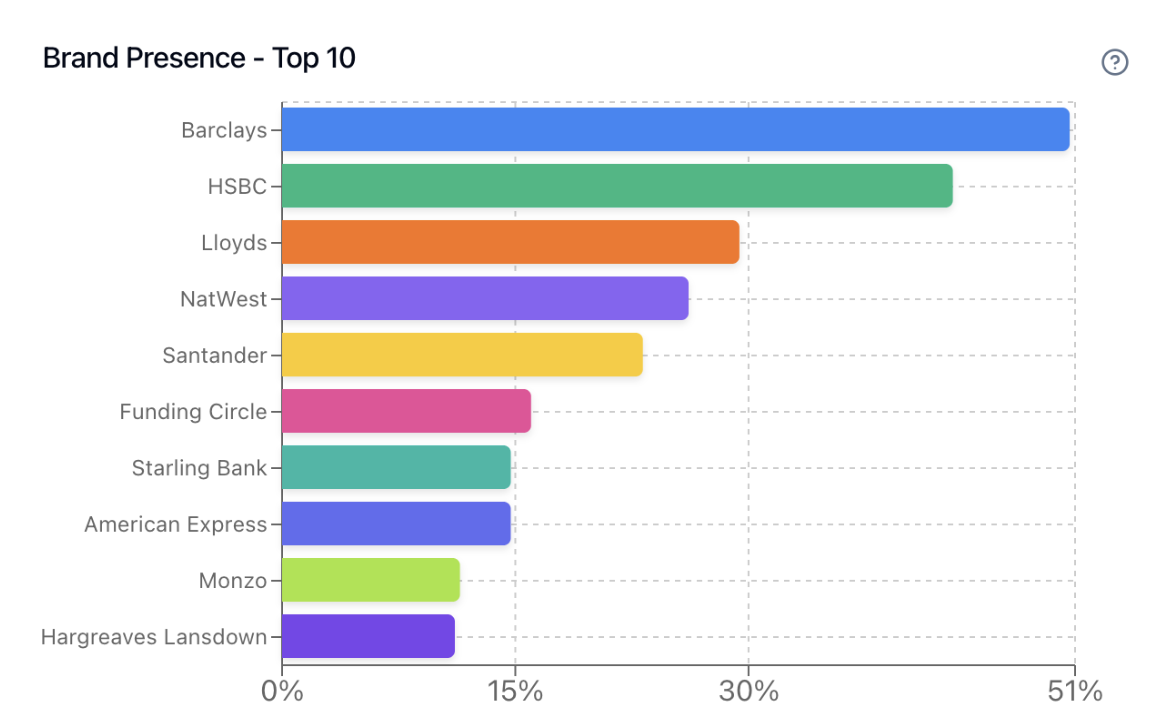
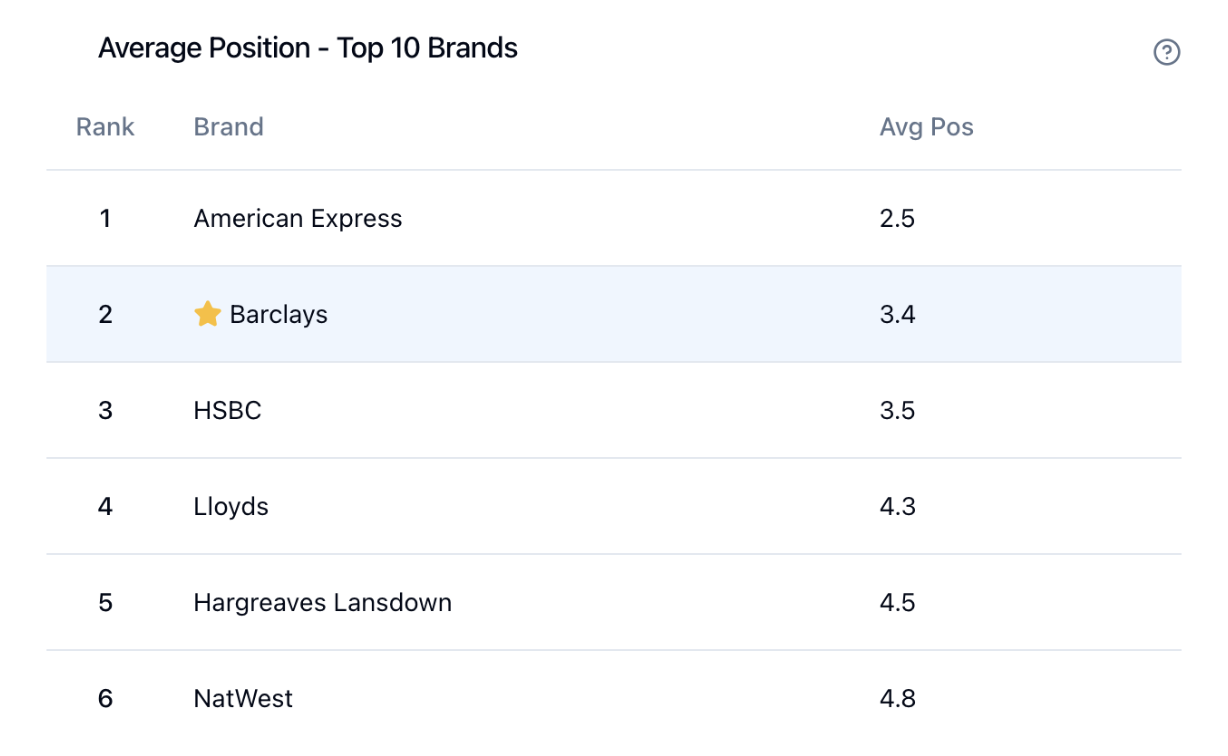
    New KPI canon: “Brand Presence” (share of relevant queries where your brand appears) and “Partnership Advantage Ratio” (relative citation uplift from direct integrations) become standard competitive benchmarks; tool vendors and analyst firms will normalise them as category metrics.

    Retail and B2B shortlists compress: In categories where decision cycles can safely compress (consumer electronics accessories, SaaS categories with clear ICP fit), LLM answers will reduce the average number of visited options by 30–50%. Shelf space shrinks. Being off the shelf is existential.

    Late-entry tax becomes visible: By 2027, categories with meaningful LLM presence will exhibit a 3–10x cost premium for brands trying to enter the default set post-lock-in (seen as sustained SOV loss despite escalated spend). Analysts will misattribute this to “creative fatigue” or “market saturation”; the underlying cause will be retrieval position.

    Strategy: a 180-day program any CEO can mandate

    Let’s forget about moonshots for the moment and take a look at disciplined plumbing, organisational clarity, and a few hard trade-offs.

    Days 0–30: Governance, baselines, and data hygiene

    Appoint a Head of AI Discoverability (reporting to the CMO with dotted line to Product/Data). Give them budget, cross-functional remit and a powerful platform like Spotlight for a competitive advantage.

    Establish source of truth for product facts, claims, specs, and pricing. Build a daily export to a public, versioned, machine-parsable endpoint (JSON + schema).

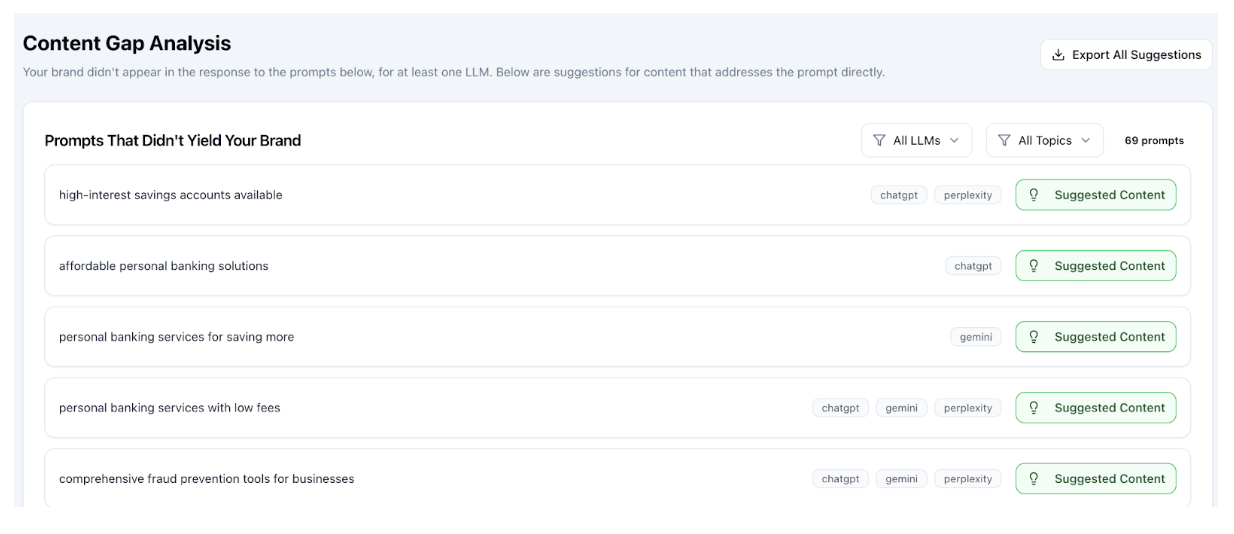
    Run a Citation Audit across top answer engines and key prompts (category CEPs, competitor comparisons, buyer use cases). Score presence, position, consistency, and conflicts.

    Days 31–90: Structured presence and retrieval readiness

    Refactor top 50 evergreen pages into citation-ready objects: clear claims → evidence → references; canonical definitions; unambiguous names; inline provenance.

    Publish a Developer-grade Product Catalog (public or gated to partners) with IDs, variants, filters, and canonical images. Think “docs” for your products.

    Pursue one material partnership (e.g., data feed to a relevant answer engine, vertical marketplace, or respected standards body). Pay the opportunity cost of openness where needed.

    Days 91–180: Feedback loops and compounding

    Launch a Prompt-set QA: a stable suite of 200–500 prompts representing your buying situations. Track citation rate weekly in Spotlight. File model feedback where supported.

    Build a Citation Network Plan: placements in high-authority reference nodes (credible reviewers, associations, comparison frameworks). Not sponsorships, structured content with provenance.

    Pilot AI-native formats (decision tables, selector tools, explorable calculators) that answer engines love to cite. Ship them under your domain with clear licenses.

    Iintegrate this with brand: keep your distinctive assets consistent across the structured outputs. The machine needs to see the same names, colorus, claims, and relationships as the human.

    Organisational implications (the part nobody likes)

    Product owns facts. Marketing cannot be the fixer of inconsistent facts. Product and Data must own canonical truth; Marketing packages it.

    Legal becomes an enabler. Tighten claims to what you can prove and source. Over-lawyered ambiguity is now a visibility bug.

    Analytics changes its job. Build pipelines to detect AI-sourced visits and to estimate dark-referral uplift. Stop using “percent of traffic from LLMs” as a go/no-go gate.

    Agency relationships evolve. Brief agencies on citation engineering and partnership brokering, not just copy and backlinks. Insist on prompt-set QA in retainer scopes.

    Now for a brief breathe, pause and exploration of a contrarian view just to test our thesis

    Could LLM search fizzle like voice? Possibly. Falsifiers would include: persistent factual error rates that erode trust; regulatory bans on model outputs for product categories; or a consumer reversion to direct search due to cost or latency spikes. If any of those stick, traffic will remain with traditional search, and this investment will look early.

    But the option value of early presence is high and the bounded downside of disciplined investment is modest. A 10–15% budget carve-out spread across hygiene, structure, and one partnership yields reusable assets: cleaner facts, faster site, better catalogs, and a partner network that also benefits traditional search and retail syndication. In other words, even in the “LLM underperforms” world, you keep the plumbing upgrades.

    The revealed preferences of incumbents also matter: if the platform that profits most from clicks is embracing AI answers that reduce clicks, you should infer the direction of travel.

    The CEO’s decision: speed over certainty

    Great strategy is often choosing when to be precisely wrong versus roughly right. Here the choice is blunter: be early and compounding, or be late and expensive. You are not deciding whether LLM traffic matters; you are deciding whether defaults will be set without you.

    Translate that to a board slide:

    Goal: Achieve ≥30% citation rate across core buying prompts within six months in the top three answer engines serving our category.

    Levers: Canonical data feed live in 60 days; one material partnership signed in 90; top 50 pages refactored to citation-ready objects; prompt-set QA operational.

    Risks: Over-exposure of data; partnership dependence; shifting retrieval standards.

    Mitigations: License terms; multi-platform strategy; quarterly schema reviews; budget ceiling of 15% of search program.

    Payoff: Presence in the compressed consideration set; reduced CAC volatility as answer engines normalise; durable retrieval position before feedback loops harden.

    Pricing power migrates to the shortlist. When decisions compress, demand concentrates on defaults. Brands on the list can sustain price; brands off it compete only on discount and direct response.

    Moats look like boring plumbing. The edge is not a clever ad. It is a clean product catalog, consistent naming, fast indices, and contracts your competitors delayed.

    Measurement must graduate. Treat traffic as a downstream dividend. Manage to citation rate, partnership advantage, and time-to-lock-in. Report them to the board.

    Agencies and tools will re-segment. New winners will be those that operationalise structured truth and retrieval QA, not just backlink alchemy. Expect consolidation around vendors who can prove citation lift.

    Optionality has a clock. Windows close silently. If your decision-to-execution cycle is \> six months, the only winning move is to start now.

    When your competitor is building machine memory while you’re awaiting human clicks, you are not in the same game. You’re playing last year’s sport on this year’s field.

  • The Day Marketing Realised Its Audience Had No Pulse

    The Day Marketing Realised Its Audience Had No Pulse

    When machines started buying on our behalf, the world’s best storytellers found themselves pitching to code. Turns out, the algorithm doesn’t care about your brand voice, your mission statement, or your purpose. It just wants clean data and maybe a little confession of human weakness.

    The average American supermarket carries over 30,000 distinct items, or SKUs. For a century, the primary goal of a consumer packaged goods (CPG) company like Procter & Gamble or Unilever has been to win the battle for attention on that crowded shelf. They paid for eye-level placement, designed vibrant packaging, and spent billions on advertising to build a flicker of brand recognition that would translate into a purchase decision in the fraction of a second a human shopper scans an aisle. That entire economic model is predicated on a simple fact: the consumer is human.

    That fact is no longer a given.

    What happens when your weekly shop is automated or one of your customers says: “Hey Google, add paper towels to my shopping list.” Or, more disruptively: “Order me more paper towels.” There is no shelf. There is no packaging. There is no moment of cognitive battle between Bounty, with its quicker-picker-upper jingle stored in your memory, and the generic store brand. There is only an intent, an algorithm, and a transaction. The consumer, in the traditional sense, has been abstracted away. In their place is the Algorithmic Consumer, and marketing to it requires a fundamentally different strategy.

    This is a platform shift that threatens to upend the core tenets of brand, distribution, and advertising. The new gatekeepers are not retailers, but the AI assistants that mediate our interaction with the market. For businesses, the urgent strategic question is shifting from “How do we reach the consumer?” to “How do we become the machine’s default?”

    The Great Compression: From Funnel to API Call

    The classic marketing funnel: Awareness, Interest, Desire, Action (AIDA), is a model designed for the psychology of a human buyer. It’s a slow, expensive, and inefficient process.

    * Awareness is built with Super Bowl ads and billboards—blunt instruments for mass attention.

    * Interest is cultivated through content marketing and positive reviews.

    * Desire is manufactured through aspirational branding and targeted promotions.

    * Action is the final click or tap in a shopping cart.

    The AI assistant acts as a powerful compression algorithm for this entire funnel. The user simply states their intent: “I need paper towels.” The stages of Awareness, Interest, and Desire are instantly outsourced to the machine. The AI evaluates options based on a set of parameters and executes the Action. The funnel is compressed into a single moment.

    This has devastating implications for brands built on awareness. The billions of dollars spent by P&G on making “Bounty” synonymous with “paper towels” have created a cognitive shortcut for humans. An AI, however, has no nostalgia for commercials featuring clumsy husbands. It has an objective function to optimise. The machine’s decision might be based on:

    * Price: What is the cheapest option per sheet?

    * Delivery Speed: What is available for delivery in the next hour?

    * User History: What did this user buy last time?

    * Ratings & Reviews: What product has the highest aggregate rating for absorbency?

    * User Preferences: The user may have once specified “eco-friendly products only,” a constraint the AI will remember with perfect fidelity.

    The strategic imperative shifts from building a brand in the consumer’s mind to feeding the algorithm with the best possible data. Your API is your new packaging. The quality of your structured data: price, inventory, specifications, sourcing information, carbon footprint—is more important than the cleverness of your copy. This is the dawn of Business-to-Machine (B2M) marketing.

    Generative Engine Optimisation (GEO)

    For the past two decades, Search Engine Optimisation (SEO) has been the critical discipline for digital relevance. The goal was to understand and appeal to Google’s ranking algorithm to win placement on the digital shelf of the search results page. The coming paradigm is Generative Engine Optimisation (GEO), but it is different in several crucial ways.

    SEO is still fundamentally a human-facing endeavour. The goal is to rank highly so that a human will see your link and click it. The content, ultimately, must persuade a person.

    GEO is a machine-facing endeavour. The goal is to be the single best answer that the AI assistant returns to the user. Often, there is no “page two.” There is only the chosen result and the transaction. The audience is the algorithm itself.

    The factors for winning at GEO are not keywords and backlinks, but logic-driven and data-centric attributes:

    1. Availability & Logistics: An AI assistant integrated into a commerce platform like Amazon or Google Shopping will have real-time inventory and delivery data. A product that can be delivered in two hours will algorithmically beat one that takes two days, even if the latter has a stronger “brand.” The winner is not the best brand, but the most available and convenient option.

    2. Structured Data & Interoperability: Can your product’s attributes be easily ingested and understood by a machine? A company that provides a robust API detailing its product’s every feature—from dimensions and materials to warranty information and sustainability certifications—provides the AI with the granular data it needs to make a comparative choice. A company with a beautiful PDF brochure is invisible.

    3. Cost & Economic Efficiency: Machines are ruthlessly rational economic actors. If a user’s prompt is “order more paper towels,” and no brand is specified, the primary variable for the AI will likely be optimising for cost within a certain quality band. This is a brutal force of commoditisation. Brand premiums built on psychological messaging are difficult to justify to a machine unless they are explicitly encoded as a user preference (“I only buy premium brands”).

    The absurdity of this new reality can be humorous. One can imagine marketing teams of the future not brainstorming slogans, but debating the optimal JSON schema to describe a toaster’s browning consistency. The Chief Marketing Officer may spend more time with the Chief Technology Officer than with the ad agency.

    The Aggregation of Preference

    This shift fits perfectly within the framework of Aggregation Theory. The AI assistant platforms: Amazon’s Alexa, Google’s Assistant, Apple’s Siri and the LLMs building this out directly in their apps and websites

    1. They own the user relationship. They are integrated directly into our homes and phones, capturing our intent at its source.

    2. They have zero marginal costs for serving a user. Answering one query or one billion is effectively the same.

    3. They commoditise and modularise supply. The paper towel manufacturers, the airlines, the pizza delivery companies; they all become interchangeable suppliers competing to fulfill the intent captured by the Aggregator.

    The ultimate moat in this world is the default.

    When a user says “Claude, order a taxi,” will the default be Uber or Lyft? Anthropic will have the power to make that decision. It could be based on which service offers the best API integration, which one pays Amazon the highest fee for the referral, or it could be an arbitrary choice. The supplier is in a weak position; they have been disconnected from their customer.

    This creates a new, high-stakes battleground. The first time a user links their Spotify account to their Google Home, they may never switch to Apple Music. The first time a user says, “From now on, always order Tide,” that preference is locked in with a far stronger bond than brand loyalty, which is subject to erosion. It is now a line of code in their user profile. Winning that first transaction, that first declaration of preference, is everything.

    We will likely see three strategic responses from suppliers:

    * The Platform Play: Companies will pay exorbitant fees to be the default choice. This is the new “slotting fee” that CPG companies pay for shelf space, but on a winner-take-all, global scale.

    * The Direct Play: Brands will try to build their own “assistants” or “skills” to bypass the Aggregator. For example, “Ask Domino’s to place my usual order.” This works for high-frequency, single-brand categories but is a poor strategy for most products. Nobody is going to enable a special “Bounty skill” for their smart speaker.

    * The Niche/Human Play: The escape hatch from algorithmic commoditisation is to sell something a machine cannot easily quantify. Luxury goods, craft products, high-touch services, and experiences built on community and storytelling. These are categories where human desire is not about utility maximisation but about identity and emotion. The machine can book a flight, but it can’t replicate the feeling of being part of an exclusive travel club.

    The Strategic Humanist’s Dilemma

    This brings us to the human cost of algorithmic efficiency. A world where our consumption is mediated by machines is an intensely practical one. We might get lower prices, faster delivery, and more rational choices aligned with our stated goals (e.g., sustainability). This is the utopian promise: the consumer is freed from the cognitive load of choice and the manipulations of advertising.

    However, it is also a world of profound sterility. Serendipity, discovering a new brand on a shelf, trying a product on a whim, is designed out of the system. The market becomes less of a vibrant, chaotic conversation and more of an optimised, silent database. Challenger brands that rely on a clever ad or a beautiful package to break through have no entry point. Power consolidates further into the hands of the platform owners who control the defaults.

    The strategic implications are stark and urgent.

    1. For CPG and Commodity Brands: The future is B2M. Investment must shift from mass-media advertising to data infrastructure, supply chain optimisation, and platform partnerships. Your head of logistics is now a key marketing figure.

    2. For Digital Native Brands: Winning the first choice is paramount. The focus must be on acquisition and onboarding, with the goal of becoming the user’s explicit, locked-in preference.

    3. For All Brands: Differentiate or die. The middle ground of “decent product with good branding” will be vaporised by algorithmically-selected, cost-effective generics on one side and high-emotion, human-centric brands on the other. You must either be the most efficient choice for the machine or the most meaningful choice for the human.

    The age of marketing to the human subconscious is closing. The slogans, jingles, and emotional appeals that defined the 20th-century consumer economy will not work on a silicon-based consumer. The companies that will thrive in the 21st century are those that understand this shift, reorient their operations, and learn to speak the cold, ruthlessly efficient language of machines.

  • From SEO to Survival: The Three Biggest LLM Questions Leaders Can’t Ignore

    The buzz around generative AI is impossible to ignore. With McKinsey estimating it could add between $2.6 and $4.4 trillion in value to the global economy each year, it’s no wonder leaders are feeling the pressure to get their strategy right.

    But where do you even begin?

    We sat down with Dan, one of our in-house experts on LLM SEO, to cut through the noise and map out a practical path forward for any brand navigating this new landscape.

    Q1. What’s your advice for a business leader who is just starting to think about what LLMs mean for their company?

    Dan: The honest answer? Start with a dose of humility and a lot of measurement. There’s a ton of confident commentary out there, but the truth is, even the people building these models acknowledge they can’t always interpret exactly how an answer is produced. So, treat any strong claims with caution.

    Instead of getting caught up in speculation, get a concrete baseline. Ask yourself: for the questions and topics that matter to our business, do the major LLMs mention us? Where do we show up, and how do we rank against our competitors? We call this a “visibility score.” It takes the conversation from abstract theory to a tangible map you can actually work with.

    If you’re wondering why this is urgent, two external signals make it crystal clear. First, Gartner predicts that by 2026, traditional search engine volume could drop by 25% as people shift to AI-powered answer engines. That’s a fundamental shift in how customers will discover you. 

    Second, the investment and adoption curves are only getting steeper. Stanford’s latest AI Index shows that funding for generative AI is still surging, even as overall private investment in AI dipped. Together, these trends tell us that your brand’s visibility inside LLMs is going to matter more and more with each passing quarter.

    Q2. Once you know your visibility baseline, what should you do to move the needle?

    Dan: Think in two horizons:

    The model horizon (slow).

    Core LLMs are trained and fine-tuned over long cycles. Influence here is indirect: you need a strong, persistent digital footprint that becomes part of the training corpus. This is where classic disciplines: SEO, Digital PR, and authoritative content publishing still matter. High-quality, well-cited articles, consistent mentions in credible outlets, and technically sound pages are your insurance policy that when the next model is trained, your brand is part of its “memory.”

    The retrieval horizon (fast).

    This is where you can act immediately. Most assistants also rely on Retrieval-Augmented Generation (RAG) to pull in fresh sources at query time. The original RAG research showed how retrieval improves factuality and specificity compared to parametric-only answers. That means if you’re not in the sources LLMs retrieve from, you’re invisible; no matter how strong your legacy SEO is.

    This is why reverse engineering how machines are answering today’s queries is a strategic real-world data point. By mapping which URLs, articles, and publishers are being cited in your category, you uncover the blueprint of what LLMs value: the content structures, schemas, and PR signals they consistently lean on.

    From there, your levers become clear:

    Digital PR – Ensure your brand is mentioned in trusted publications and industry sources that models are already surfacing.
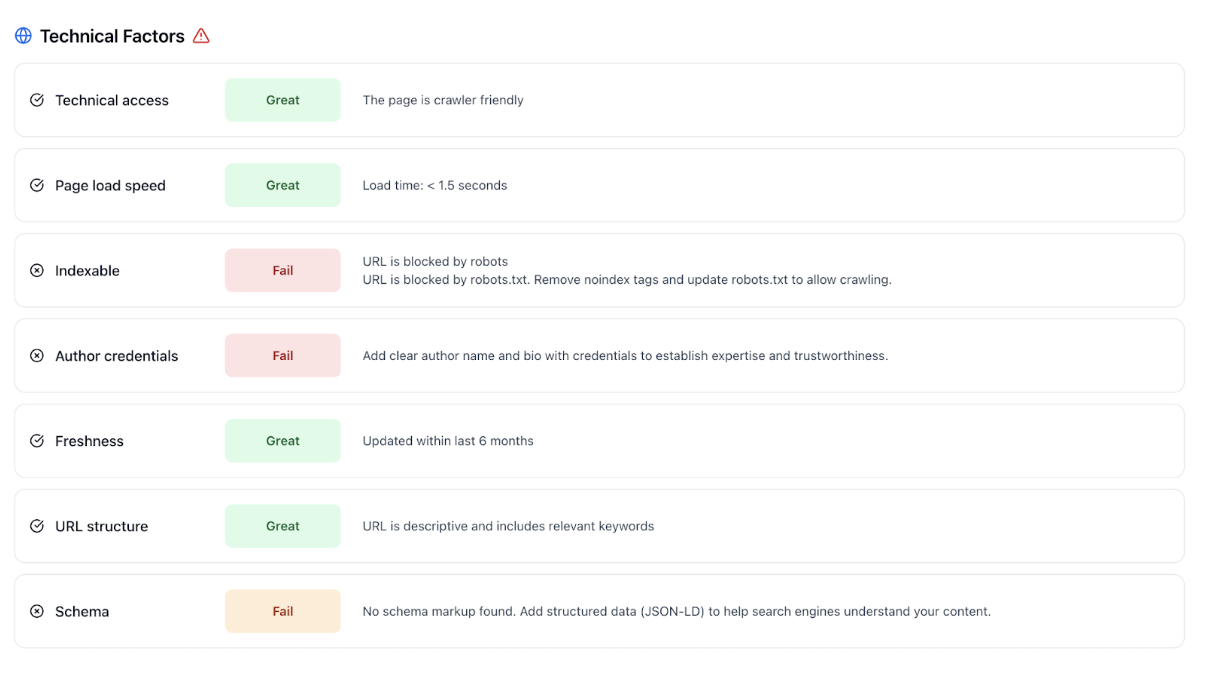
    SEO – Maintain technically flawless pages with schema, structured data, and crawlability, making your content easy for retrieval pipelines.
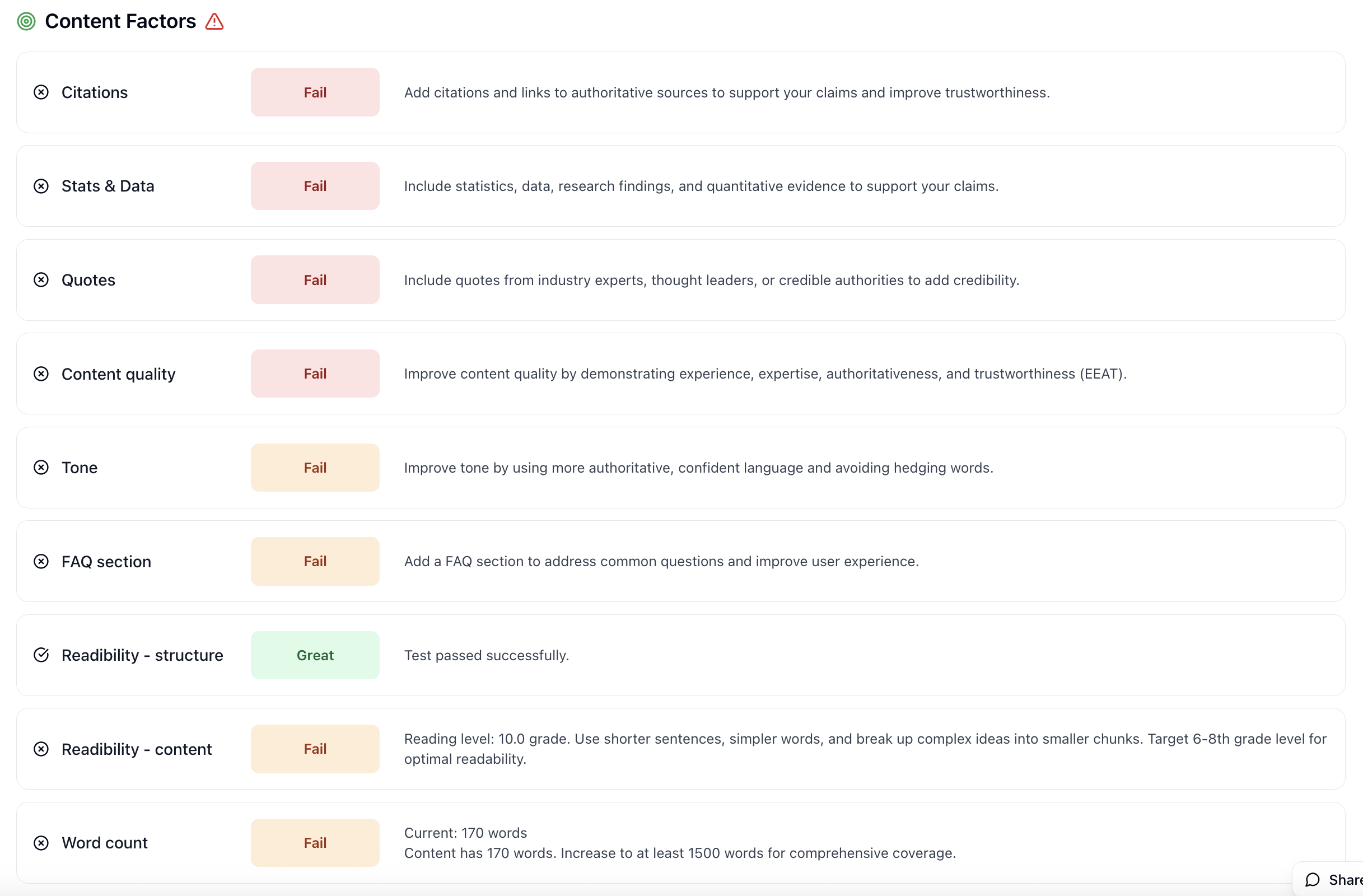
    Content strategy – Match the formats models prefer (lists, tables, FAQs, authoritative explainers), and systematically fill topical gaps.
    Analytics – Track citations, rank shifts, and model updates to iterate quickly.

    Q3. Let’s say you’ve mapped your visibility, identified the gaps, and set your priorities. What do you do on Monday morning?

    Dan: This is where you turn your analysis into action with briefs and experiments.

    First, audit what the models are already rewarding. Look at the URLs they cite as sources for answers on your key topics. For each one, study its:

    Structure: Does it have clear headings, tables, lists, and direct answers to common questions?
    Technical setup: How is its metadata, schema, and internal linking structured? Is it easy to crawl?
    Depth and coverage: How thoroughly does it cover the topic? Does it include definitions, practical steps, and well-supported claims?

    Doing this at scale can be tedious, which is why we use tools like Spotlight to analyse hundreds of URLs at once and find the common patterns.

    Next, create a “best-of” content brief. Let’s say for a key topic, ChatGPT and other AIs consistently cite five different listicles. Compare them side-by-side and merge their best attributes into a single master blueprint for your content team. This spec should include required sections, key questions to answer, table layouts, reference styles, and any recurring themes or entities that appear in the high-ranking sources. You’re essentially reverse-engineering success.

    Then, fill the gaps the models reveal. If you notice that AI retrieval consistently struggles to find good material on a certain subtopic; maybe the data is thin, outdated, or just not there; create focused content that fills that void. RAG systems tend to favour sources that are trustworthy, specific, and easy to break into digestible chunks. The research backs this up: precise, well-structured information dramatically improves the quality of the AI’s final answer.

    Finally, instrument everything and track your progress. Treat this like a product development cycle:

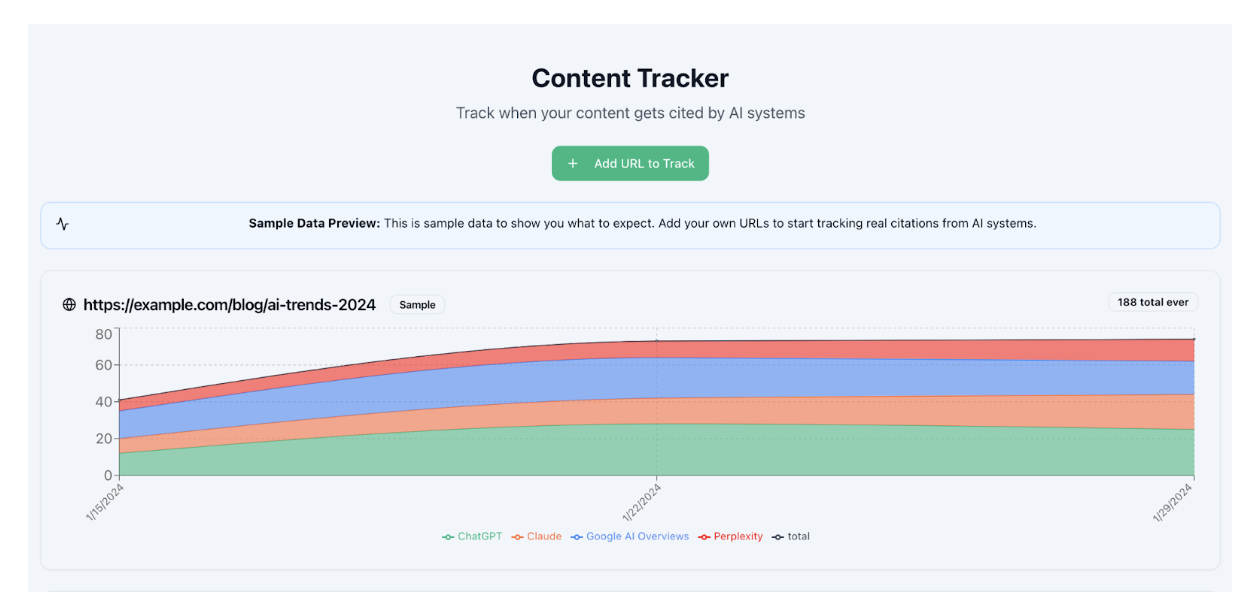
    Track how your new and updated content performs over time in model answers and citations.
    Tag your content by topic, format, and schema so you can see which features are most likely to get you included in an AI’s answer.
    Keep an eye out for confounding variables, like major model updates or changes to your own site, and make a note of them.

    This is critical because the landscape is shifting fast. That Gartner forecast suggests your organic traffic mix is going to change significantly. By reporting on your LLM visibility alongside classic SEO metrics, you can keep your stakeholders informed and aligned. You should get into a rhythm of constant experimentation. The AI Index and McKinsey reports both point to rapid, compounding change. Run small, fast tests: tweak your content structure, add answer boxes and tables, tighten up your citations, and see what moves the needle. Think of 2025 as the year you build your playbook, so that by 2026 you’re operating from a position of strength, not starting from scratch.

    Closing Thoughts

    Winning visibility in LLMs is about adapting to a fundamental shift in how people access knowledge and how machines assemble information. The path forward starts with three simple questions: Where do you stand today? Which levers can you pull right now? And how do you turn those levers into measurable experiments?

    The data is clear: the value on the table is enormous, your competitors are already moving, and the centre of gravity for discovery is shifting toward answer engines. The brands that build evidence-based content systems and learn to iterate in this new environment will gain a durable advantage as the market resets.

    Evidence & Sources

  • Built to Be First: The Cognitive Science Behind LLM Visibility

    Back in 2012, visibility was something you could buy.
A well-placed bid, a few clever keywords, and a handful of backlinks were enough to nudge your brand onto page one. Search was a game — noisy, yes, but knowable. You could outspend, out-optimize, or outwait the competition.

    That world is vanishing.

    In its place: a quieter, more opaque ecosystem where visibility is bestowed. Where your brand’s presence is no longer earned through page clicks, but summoned by the cold inference of a machine.Welcome to the age of the large language model.

    The Tyranny of Being First

    Ask ChatGPT a question about mortgages, or Claude about ESG investing, or Perplexity about crypto wallets and you’ll notice something. The same names surface. Again and again. Not because they’re the most ethical. Or the most innovative. But because they were early. Structured. Frequently cited. Built for machines, not just for humans.

    What’s at play here is not just technology. It’s psychology.

    Cognitive science calls it the primacy effect: our bias toward what we see first. What we see first, we remember. What we remember, we trust. In a world where LLMs are becoming the new front page of the internet, first position is not a convenience. It’s destiny.

    Add to that position bias; our tendency to believe top-ranked answers are more credible and you begin to understand: in LLMs, perception is reality.

    And for the brands that aren't in the first wave of answers? They might as well not exist.

    Your Brand, as Understood by a Machine

    LLMs don’t “search” the way humans do. They don’t care about page rank or ad spend. They absorb. They predict. They stitch together meaning from trillions of words. Which means they understand your brand not through your home page or your brand film but through your residue.

    Your brand is a statistical pattern. A mesh of citations, sentence structures, contextual cues. Not what you say, but how you’re spoken about. Not what you publish, but how the internet metabolises it.

    This changes the brief entirely.

    Too many marketers respond to LLM invisibility the wrong way. They panic, publish more, ramp up SEO production as if they’re shouting louder into a storm. But LLMs aren’t impressed by noise. They’re selective readers with very particular tastes: clarity, citation, semantic structure, regional grounding, and source reliability.

    Publishing more is irrelevant unless what you publish is aligned with how machines think.

    So pause. Audit. Not with SEO tools; but with an LLM lens. Where are you showing up? How are you being described? What types of content in your category are surfacing consistently and why?

    You need to forget what’s trending and look at what’s recurring.

    Get Your House in Order
    Before you aim to outrank your rivals, you need to clean up your own signal.

    Is your content geo-anchored?

    Is your language consistent across regions and channels?

    Are you cited by sources LLMs trust?

    Are your most important assets digestible by machines?

    It’s not about saturation. It’s about precision. The brands that show up are the ones who leave a trail built to be followed: structured, relevant, machine-readable.

    SEO was about optimising content for discoverability. LLM strategy is about engineering content for adoption.

    Think about the models themselves. They're retrained, updated, and fine-tuned continuously. A single PR piece picked up in a government report can shift your brand's prominence overnight. A misattribution or outdated FAQ can bury your relevance for months.

    If you're still treating content governance like a hygiene task, you're already behind. It's the plumbing. The wiring. The bones.

    Your teams must treat LLM visibility as a living, breathing channel. One that requires constant monitoring, real-time feedback loops, and proactive adaptation. It’s not a campaign. It’s a system.

    There is an unspoken danger here.

    LLMs aren’t echo chambers; they’re architects of what gets remembered. That means the brands that win visibility early get more exposure, more citations, more inferred credibility and, in turn, more inclusion in future model updates. It’s a feedback loop. One that doesn’t necessarily reward truth, quality, or innovation. It rewards presence.

    If your competitor is first, they get to define the category. Not just in language, but in logic.

    The most dangerous place for a brand to be is not misunderstood. It’s unmentioned.

    So What Next?

    Forget the homepage redesign. Forget the microsite. If you want to matter in the age of LLMs, you need to stop creating content for humans to browse and start creating content machines will choose.

    Because here’s the reality no one wants to say out loud: the content that shapes rankings in ChatGPT, Claude, Gemini, and Perplexity isn’t the loudest. It’s the most usable. The most structured. The most model-friendly. And that doesn’t happen by accident—it happens by design.

    The models are telling you what they like. You just have to listen. Look at the answers. Study the formats that keep surfacing. Track the patterns. Then build accordingly.

    And once you've done that? You don’t sit back. You watch.

    LLM visibility isn’t static, it moves. What appears in answers today might be gone by next week. A competitor publishes a better version. A new model rolls out. The model drifts. Suddenly, you’re out of the conversation.

    If you’re not tracking your content’s performance across models, you’ll lose ground before you even realise you were in the race. This is survival. You need a system. A tool. Something built to monitor the rise and fall of your visibility in real time. Because that’s the only way you stay ahead of the pack.

    This is the new frontline of digital relevance. No second pages. No fallback clicks. Just one shot to be part of the answer.

    If you’re not building for the model, you’re building for no one.

    Because in this new ecosystem, relevance isn’t granted by search engines or swayed by paid media. It’s determined by machines parsing trillions of signals—and deciding, in milliseconds, whether you matter.

    There’s no front page. No scroll. No second chance.

    You’re either chosen, or you’re not.

    Spotlight exists to make sure you are.

    It shows you what the models see. Tracks how your brand moves across answers. Flags the gaps. Surfaces the threats. And helps you create content the machines are more likely to use; again and again.

    In a world where LLMs are the new gatekeepers of visibility, Spotlight is your radar, your compass, and your competitive edge.

    Because if the models are shaping the future of your brand, you’d better be shaping what they learn.

    Sources
    www.get-spotlight.com

    Primacy Effect (https://wirkungswerk.de/en/primacy-effect-a-critical-consideration/)

    Position Bias (https://medium.com/manomano-tech/conquering-position-bias-d64880104fd4#)

  • The Biggest Shift in Brand Visibility Since the Internet — And No One’s Ready

    Late one evening, a friend told me how he’d asked ChatGPT about his child’s fever. The model responded with a shared citation: “According to Mayo Clinic…” It provided relief and it built trust. That moment, seemingly small, marks a profound departure in how we discover brands. We’ve moved past search; we are now existing in a world of conversation. Questions don’t go to Google; they go to generative models. The moment the model “remembers” a brand, that brand exists. And if it doesn’t recall you? You are invisible.

    It’s not merely anecdotal. A Stanford research team demonstrated that AI responses bearing clear citations earn significantly more trust—even when the answer is imperfect. Meanwhile, global surveys from KPMG and Gartner reveal a dissonance: while over 75% of professionals expect AI to reshape their work within two years, fewer than half say they trust its output. In an ecosystem where attention is concentrated in conversational windows, not search pages, that trust gap becomes a battlefield—and brands carry both the risk and the opportunity.

    To understand what’s unfolding, we can look back to when feature-phones morphed into smartphones. Brands that dominated the App Store climbed not through keywords, but by embedding themselves into the very platform interface. LLMs represent the same transformation. They aren’t indexing URLs—they’re weaving associations into their memory. And brands that fail to form part of that weave risk being bypassed altogether.

    This is where www.get-spotlight.com steps onto the stage. Without fanfare, it gives brands a pulse check on how frequently and in what tone they appear in model-generated answers. More than visibility, it tracks sentiment and data sources; a brand-level X-ray for AI recall. One B2B SaaS client discovered that after distributing structured content to neutral repositories and securing citations in high-authority sources, their brand recall in LLM responses jumped 42%. Competitors? Virtually unchanged.

    Deepfakes and automated misinformation grab headlines, but they matter only if users expect reliability. In generative conversations, reliability begins with citation. That’s why brands need a new form of storytelling: one that supplies the narrative, context, and authority models consume; and remember.

    Forget optimising for clicks. Forget chasing SERP rankings. Your strategic priority must shift toward quiet memorability: structured, sourced, model-readable context that lingers in the AI mind even between sessions.

    Because tomorrow, when someone asks, “Which CRM should I trust?”, the brand that’s not merely recalled; but memovoked, wins. And in the quiet between question and answer, brands either are or are not present. That’s today’s battleground.

    Sources

    Stanford HAI on AI citation trust
    https://hai.stanford.edu/news/generative-search-engines-beware-facade-trustworthiness

    Axios on citation-based trust in generative search
    https://www.axios.com/2023/05/03/chat-based-search-citations-accuracy-research

    KPMG Global AI Study (2025)
    https://kpmg.com/us/en/articles/2025/trust-attitudes-and-use-of-artificial-intelligence.html

    Gartner research on AI and customer trust
    https://www.cxtoday.com/conversational-ai/customers-reject-ai-for-customer-service-still-crave-a-human-touch

    Business Insider summary of KPMG AI trust report
    https://www.businessinsider.com/kpmg-trust-in-ai-study-2025-how-employees-use-ai-2025-4

    The Australian on AI distrust in Australia
    https://www.theaustralian.com.au/nation/australians-less-trusting-of-ai-than-most-countries/news-story/ca11793f341b7bd5d2682ef6e8959cde

  • From SEO to AEO: Winning in the New Age of Answer Engines

    For two decades, the goal of digital marketing was to win the click. Brands invested billions to climb Google’s rankings, guided by the principles of Search Engine Optimization (SEO). But that era is ending. A fundamental behavioral shift is underway, as users increasingly bypass traditional search for the direct, synthesized responses of Large Language Models (LLMs). For business leaders, this isn't a minor technical adjustment; it's a strategic inflection point. The new mandate is Answer Engine Optimization (AEO), and mastering it will define the next generation of market leaders.

    The Inevitable Shift from Search to Synthesis

    While Google’s dominance remains formidable, the tectonic plates of information discovery are moving. ChatGPT now handles billions of queries a week, and the growth is compounding. More critically, the nature of search is changing. Research from Bain & Company reveals a startling trend: 40% of consumer queries are now resolved without a single click, thanks to generative AI integrated into search results.

    This pattern echoes previous digital disruptions. E-commerce languished until innovations like one-click checkout removed friction. Mobile internet usage exploded only after app stores and affordable data plans created a seamless user experience. LLMs represent a similar tipping point for information. They deliver instant, polished answers, collapsing the discovery funnel and threatening to make brand websites a destination of last resort. For brands built on attracting traffic, this is an existential threat.

    The New Playbook: From Keywords to Credibility

    The tactics that defined SEO are insufficient for this new reality. The old model was a game of visibility; the new one is a game of authority.

    Traditional SEO is engineered to rank a page. It relies on keywords, backlinks, site speed, and technical structure to signal relevance to a search engine crawler. The primary goal is to entice a user to click through to a brand's owned digital property.

    Answer Engine Optimization (AEO) is engineered to become the source. It emphasizes structured, conversational knowledge that an LLM can easily parse, verify, and cite. The goal is not merely a click, but to be the definitive answer woven directly into the user’s response. Success is measured in mentions, citations, and influencing the AI's output—not just traffic.

    This transition from a page-centric to a knowledge-centric model requires a profound strategic shift. An LLM doesn't "visit" your homepage; it ingests your entire digital footprint—from your site's FAQs and product data to your mentions in trade publications and reviews on third-party sites—to form a holistic judgment of your authority.

    Evidence from the Front Lines

    This is not a future-state prediction; the correlation between authority and visibility is already quantifiable. One recent analysis found a 67–77% correlation between ranking on the first page of Google and being cited as a source by leading LLMs like ChatGPT and Perplexity. The authority signals Google has long valued are now the foundational training data for its successors.

    Furthermore, generative AI is rapidly becoming a commercial channel. Bain reports that 42% of Gen AI users now rely on it for shopping recommendations. As noted in the Financial Times, this has spurred a new category of marketing technology, with firms like Profound and Brandtech emerging to help brands track and improve their visibility within AI-generated results. They recognize that if you aren't the source of the answer, you are invisible.

    Four Strategies to Build Authority in the AEO Era

    Thriving in this ecosystem requires rewiring content strategy around four strategic pillars:

    Structure Content for Inquiry, Not Just Keywords.

    LLMs prioritize content that directly and authoritatively answers a question. Brands must move beyond keyword-stuffing and develop robust clusters of content—comprehensive FAQs, "how-to" guides, and glossaries—that are clearly organized with conversational headers and schema markup. The objective is to create modular, easily digestible knowledge blocks that an AI can confidently extract and present as fact.

    Build a Web of Trust Beyond Your Website.

    An LLM's confidence in your answer is determined by cross-domain validation. A brand's own website is just one data point. The new currency is distributed authority. This requires a renewed focus on public relations, industry partnerships, and earning citations in reputable news outlets, academic papers, and high-authority review sites. Your credibility is only as strong as your network of external validators.

    Align Content Architecture to the Full Spectrum of Consumer Questions.
    Instead of creating disconnected blog posts, leaders must architect themed content hubs that anticipate and address a wide range of related user intents. By building a comprehensive knowledge base around a core topic—from informational queries to purchase considerations—a brand signals to an LLM that it is a definitive authority in that domain.

    Measure What Matters: Mentions and Citation Velocity.
    The old dashboards of traffic and rankings are becoming obsolete. Leaders must adopt new tools to measure AEO performance, tracking how often their brand is cited in LLM outputs for key queries. This "share of answer" is the new "share of voice." Companies like Revere and Further are pioneering this space, offering analytics to help brands understand their visibility and influence within conversational AI.

    The Leadership Imperative

    The move from SEO to AEO is not a marketing task to be delegated; it is a strategic imperative for the C-suite. It challenges how businesses structure their content, measure their market presence, and define their digital authority.

    Leaders who continue to view their digital strategy solely through the lens of driving traffic to a website risk being disintermediated into oblivion. The brands that will thrive are those that pivot now, rebuilding their content philosophy not just for human readers, but for the machines that increasingly serve as our primary gateway to information. The future of brand discovery will not be about being found; it will be about being the answer.